Sep 28, 2026

A client's week is built around appointments: the morning care round, a visit from the GP,
physiotherapy, the grandchildren coming by after school. Until now those appointments were kept in
different places. With this release they come together in one calendar. The client sees it on the
Genus, family members use it in the Genus app, and care professionals manage it in the Community
Portal.

What's new

- Family members can open the client's calendar in the Genus app, see what is planned and add
their own appointments.
- Care professionals see everything planned for a client in one calendar in the Community Portal,
including appointments added by family. Colours show where each appointment comes from.
- Care organisations get a new privacy setting that hides the details of their appointments from
family members.
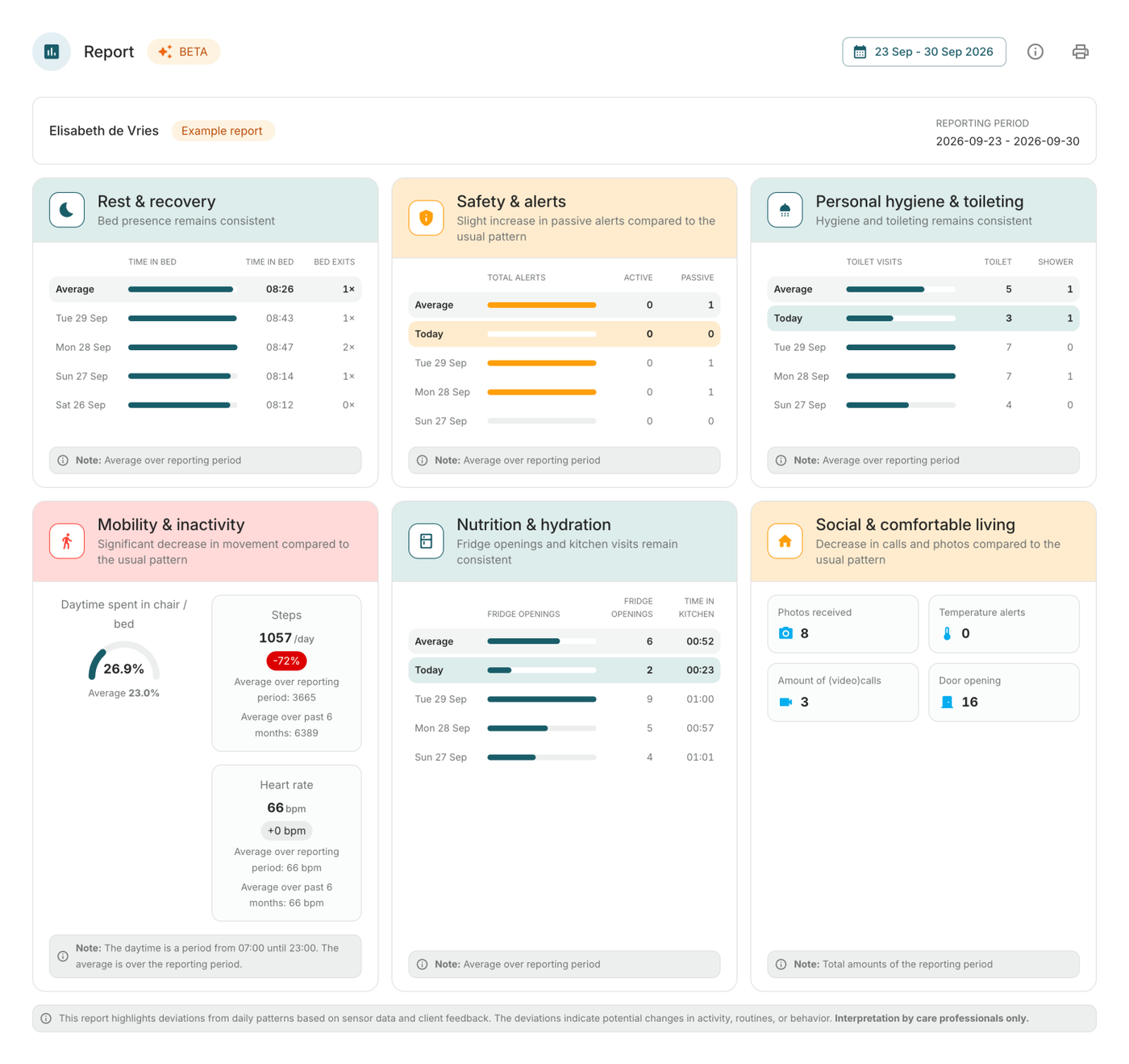
- Clients can browse forward in My Day on the Genus to see what is coming up tomorrow and later in
the week.


For family members: the calendar in the Genus app

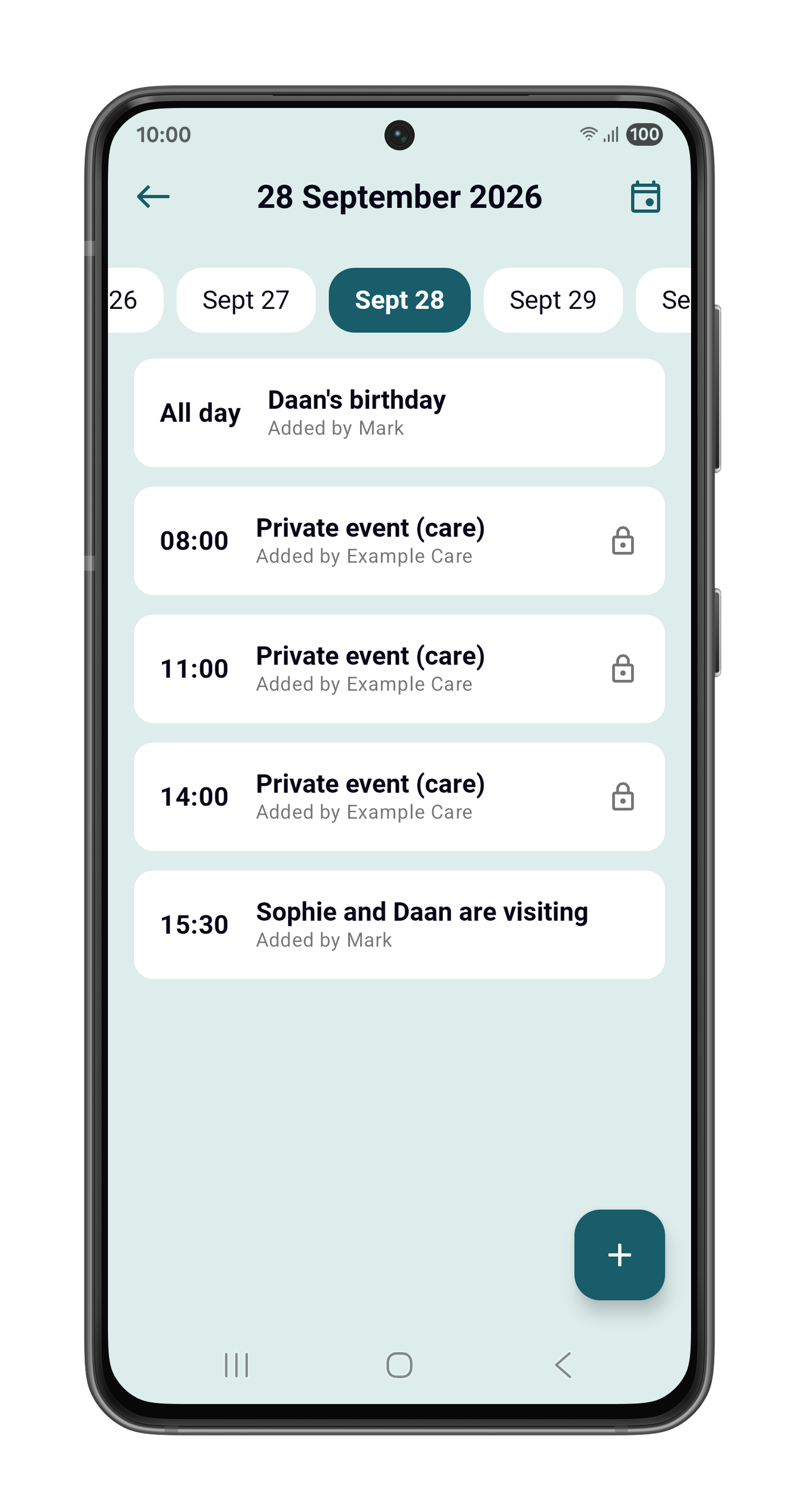
Open your loved one's Genus in the app and tap Calendar. The calendar opens on today. Swipe through the row of dates, or tap the calendar icon at the top right to jump to any day.
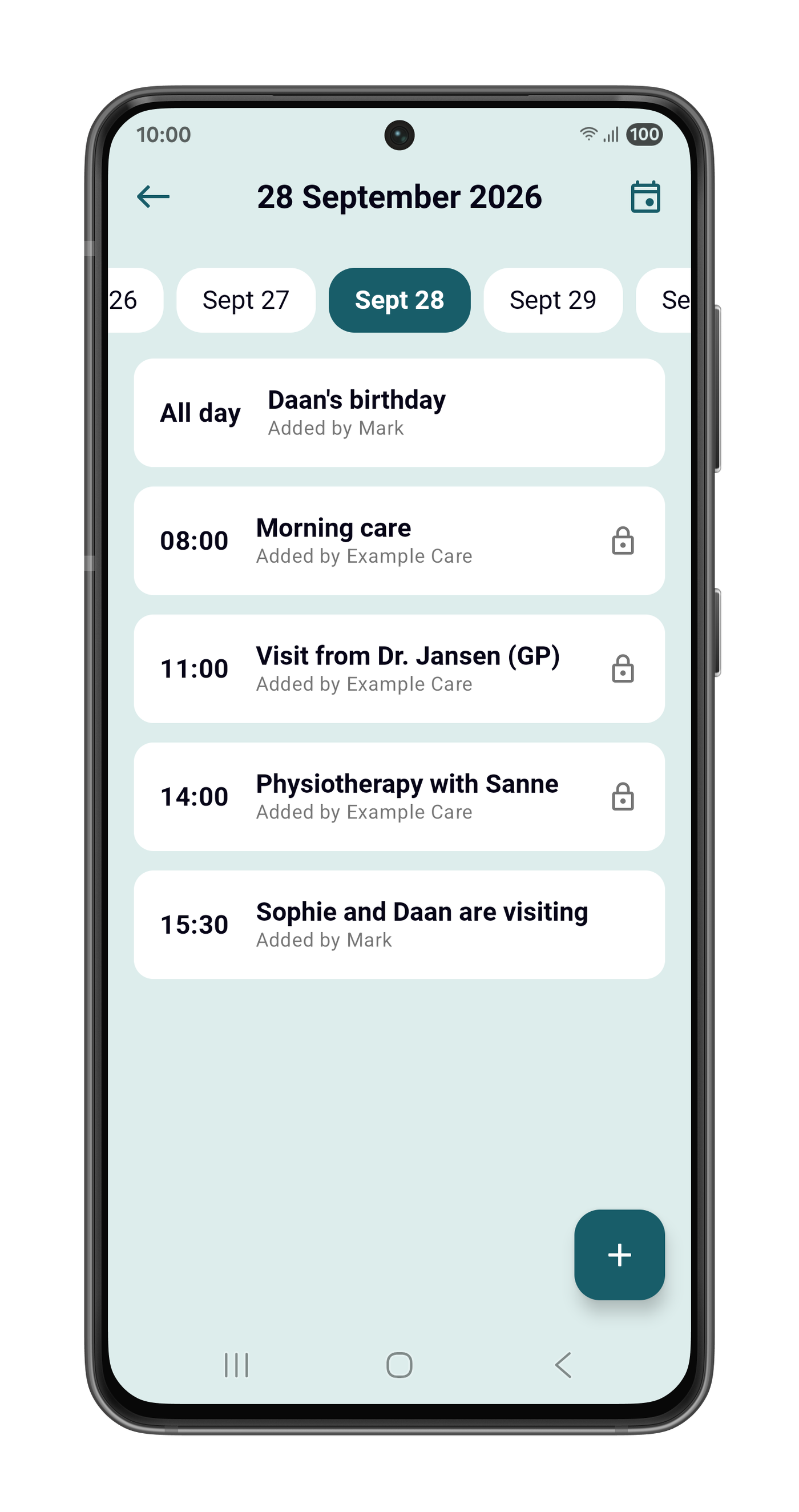
Each appointment shows its time, or All day, and who added it. Appointments from the care organisation show its name, for example Added by Example Care, so you can see at a glance what the care team planned and what the family planned. This includes appointments the care organisation plans in its own care system.

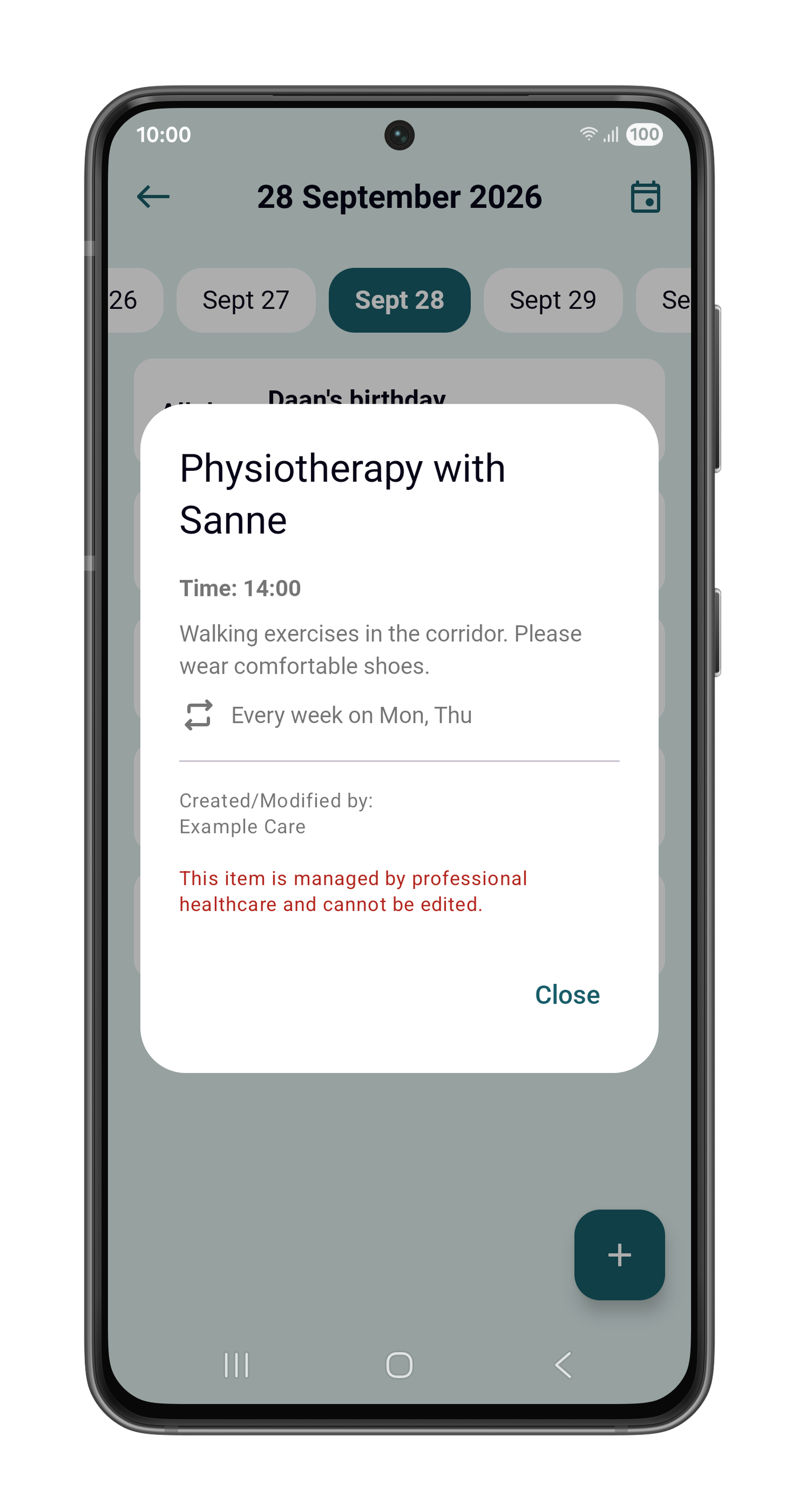
A lock marks an appointment you can't change in the app, such as one planned by the care organisation.
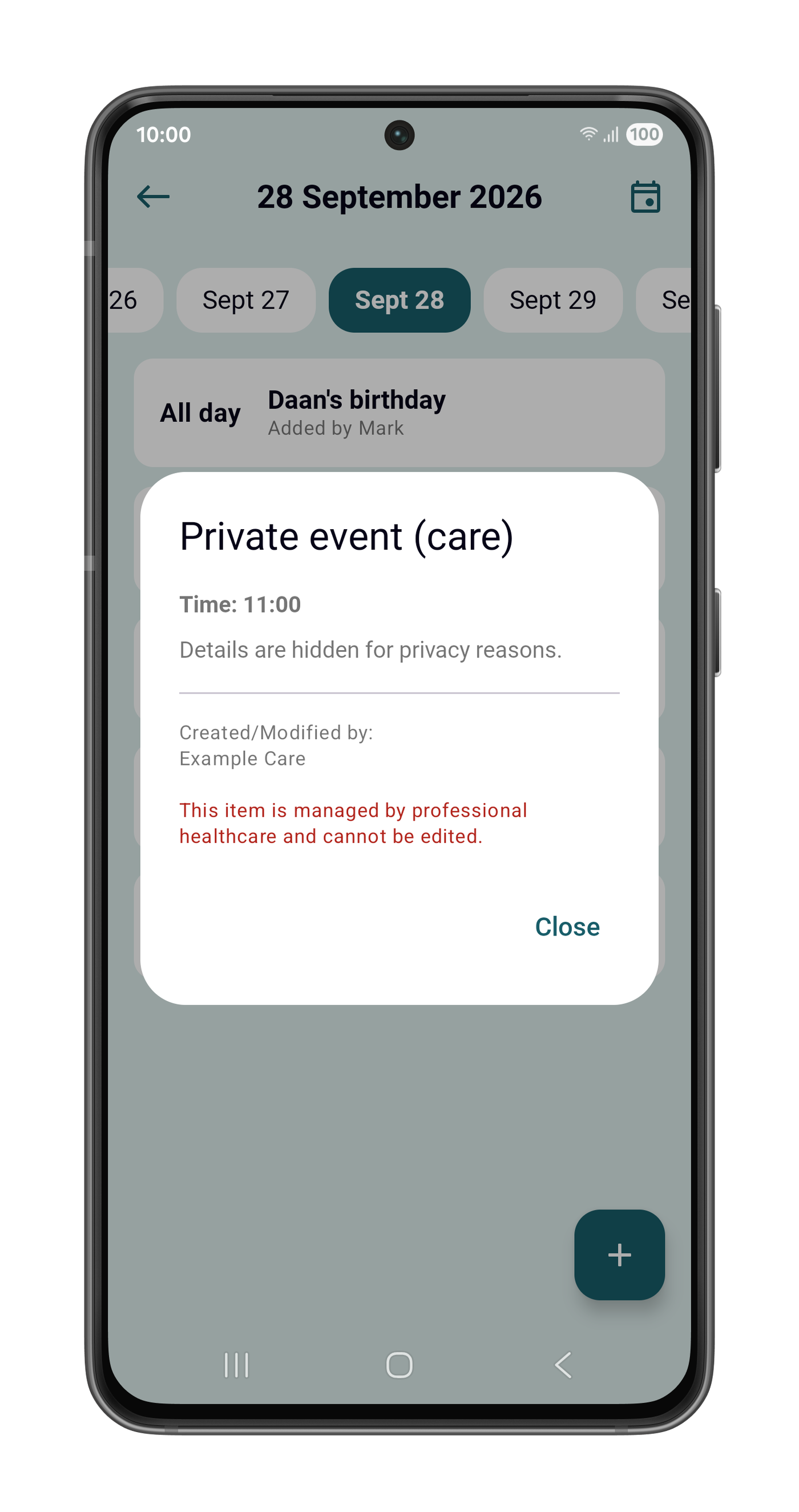
Tap any appointment to see its details: the time, the description, how it repeats, and who created or
last changed it.
Adding an appointment

Tap + and give the appointment a title and, if you like, a description. Then choose the date and
the start and end time, or switch on All day. An appointment can repeat daily, weekly on the days
you choose, or yearly, which suits birthdays. It can repeat until a date you pick, or indefinitely.
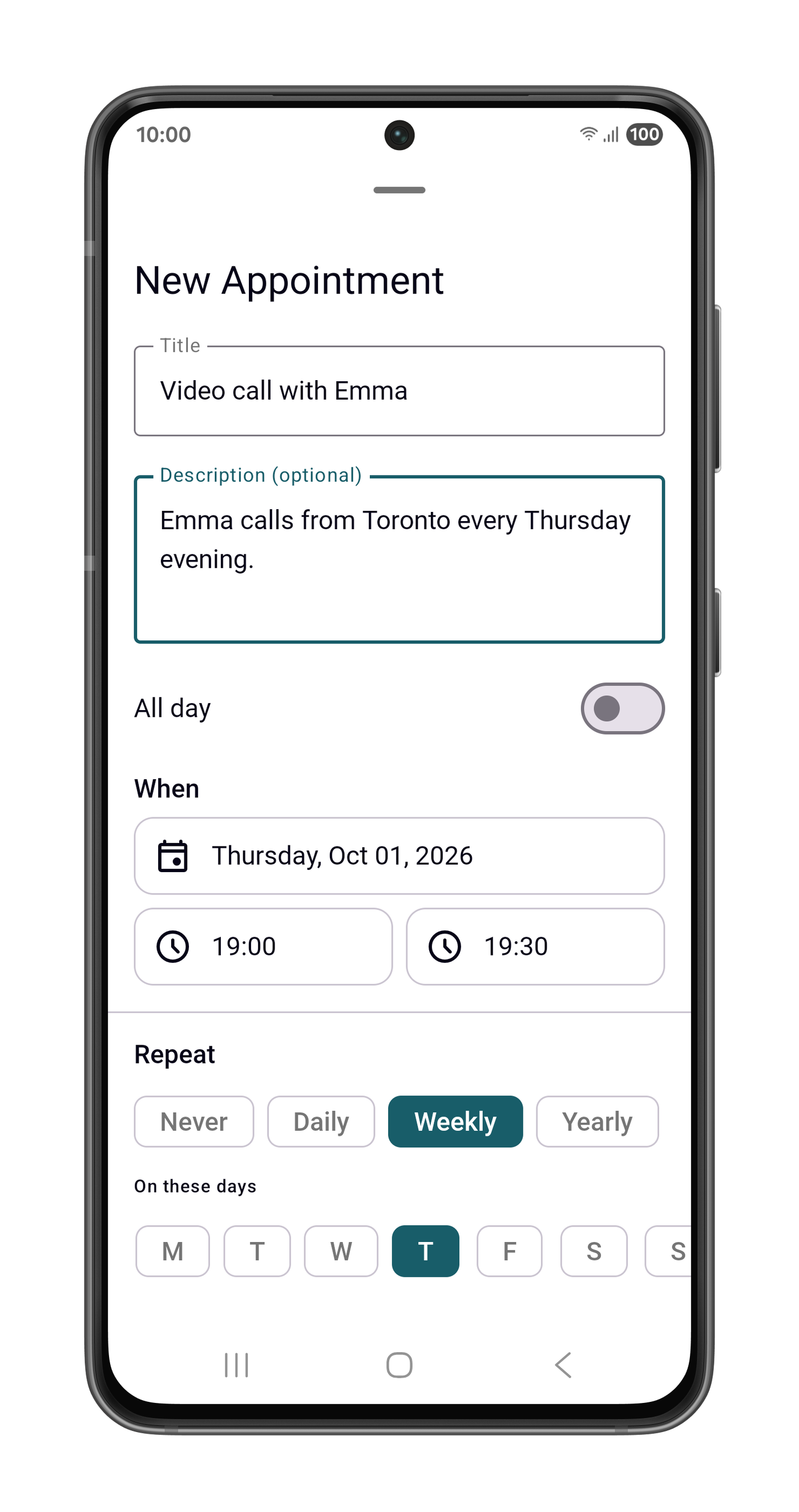
The appointment then appears on the Genus, in the app of the other family members, and in the
Community Portal for the care team.

Good to know

- Any family member connected to the Genus can change or remove an appointment added by the family.
- Changes to a repeating appointment apply to every occurrence. Removing it removes the whole series.
- Times are always the local time of the Genus. An appointment at 15:30 is at 15:30 for your loved
one, even if you add it from another time zone.


For care professionals: the calendar in the Community Portal

Open a client and click the calendar icon in the header.

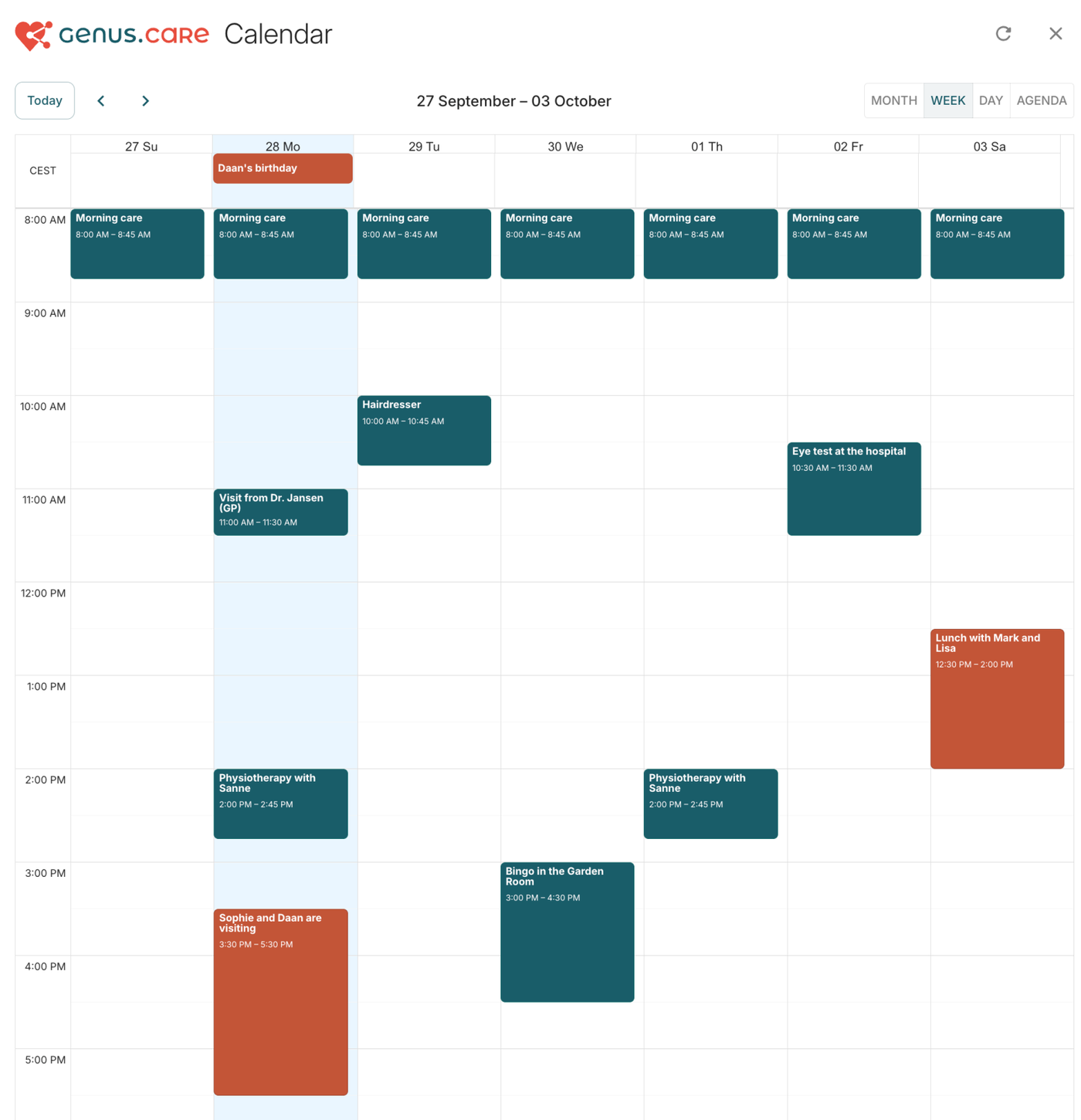
The client calendar has been rebuilt so that everything planned for a client appears in one view:

- your organisation's appointments,
- appointments family members add in the Genus app,
- appointments from a connected care system such as Nedap ONS,
- calendars the Genus is subscribed to.

ONS appointments now appear in every view, including the month view, where they could not be shown
before.

Colours show where an appointment comes from:

  • Dark teal: Your care organisation
  • Terracotta: Family, added from the Genus app
  • Light blue: A connected care system or subscribed calendar
Appointment details

Clicking an appointment now opens its details first. They show:

  • when the appointment takes place and how it repeats,
  • the description,
  • its source,
  • who added it and who last changed it.

If you can't change an appointment, the dialog says why. For example, it is planned in ONS and can only be changed there, or another care team added it.
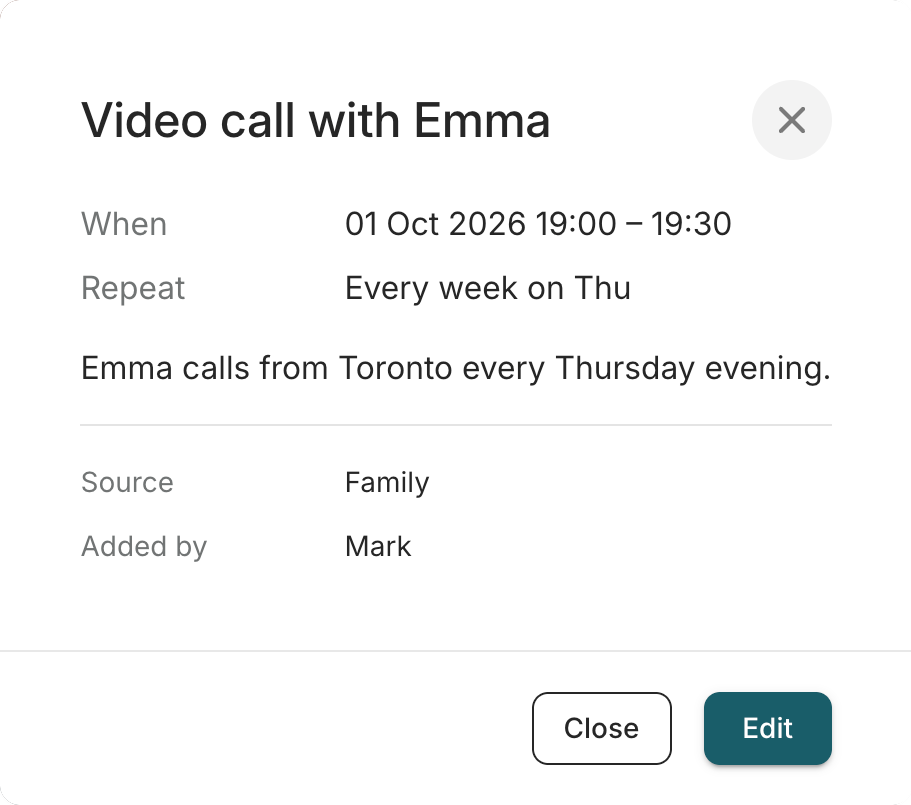
Family members see your organisation's name as the author of your team's appointments, never the name of an individual colleague.

Creating and editing

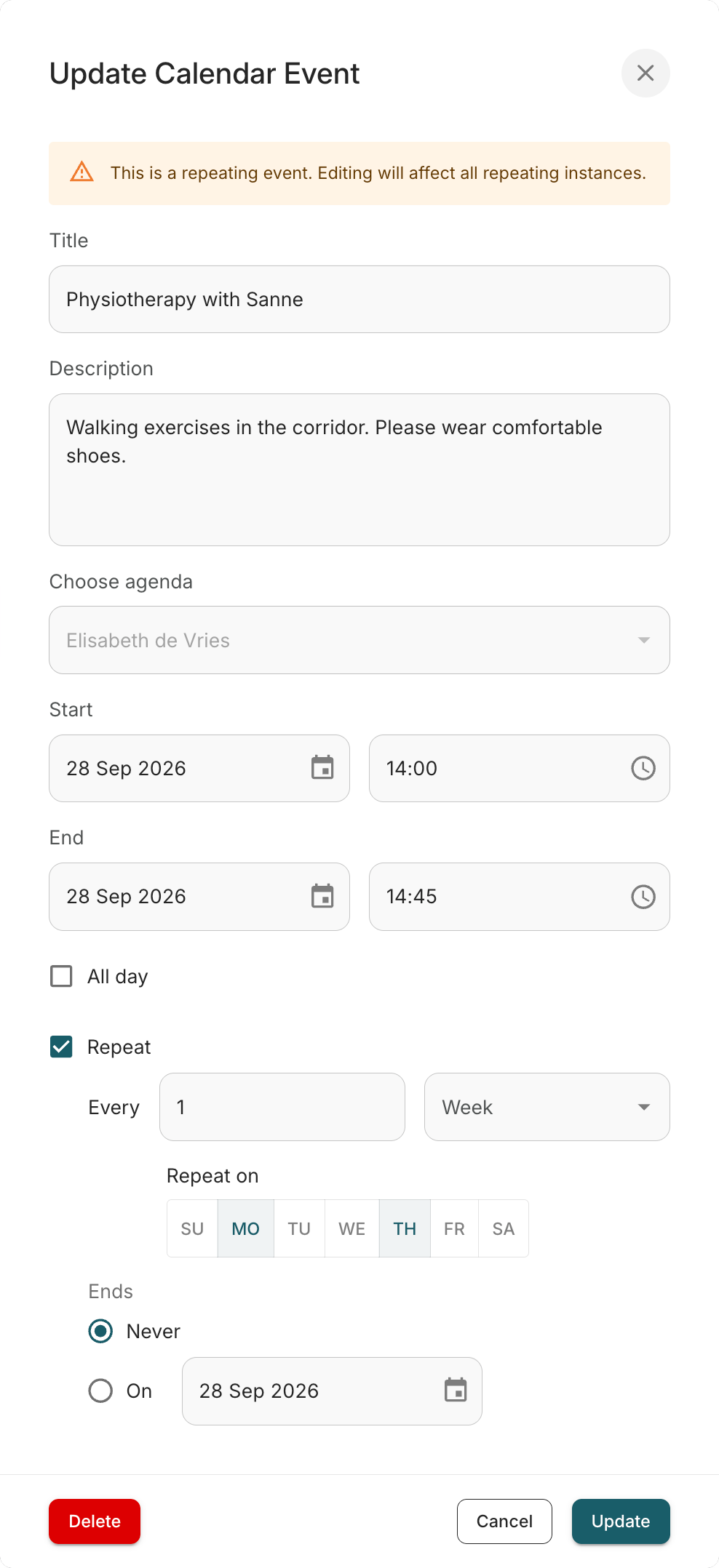
To add an appointment, click or drag across an empty slot. To change one, choose Edit in its
details.

Appointments can repeat every day, week or year at an interval you set. For weekly appointments you
choose the weekdays. A repeat can end on a date or continue indefinitely. You can also edit and remove appointments that family members added.
Good to know

- Repeating appointments. Changes always apply to the whole series. The dialog tells you this
before you save. Deleting a repeating appointment removes all of its occurrences.
- Monthly repeats. Monthly repetition is no longer available. Existing appointments with a pattern
the portal can't edit, such as a monthly repeat, stay visible and are marked read-only.
- All-day appointments always cover a single day.
- Dragging. One-off appointments can be dragged to another time or resized. Dragging one into the
all-day row turns it into an all-day appointment, and dragging it back turns it into a timed one
again.
- Time zones. Times are always the local time of the client's Genus. If your computer is set to a
different time zone, the dialog tells you.


New setting: keep appointment details private

Some appointments belong to the client and the care team, such as a hospital visit or a treatment.
The client may want the help without a conversation about it. A new setting lets your organisation
keep the details of its appointments private. Family members still see that something is planned and
when.

You'll find it under Community settings → Default Genus configuration → Hide calendar event details for family members (privacy). It is off by default, and a health administrator can switch it on.

When the setting is on, family members see your organisation's appointments in the Genus app with
their time, but without their title or description. Each one appears as Private event (care), and its details read Details are hidden for privacy reasons. Appointments that family members add
themselves stay fully visible.
Good to know

- What it covers. The setting applies to the appointments your organisation adds, including those
from your ONS connection.
- What it doesn't cover. It doesn't hide appointments added by family or calendars the Genus is
subscribed to.
- Older appointments. Appointments created before this update don't record which organisation
added them, so the setting doesn't hide them.
- The client and your team still see everything. The client sees full details on the Genus, and
your team sees them in the Community Portal.
- More than one care organisation. If a client is connected to several organisations, each
organisation's setting applies to its own appointments.


On the Genus: browse the days ahead

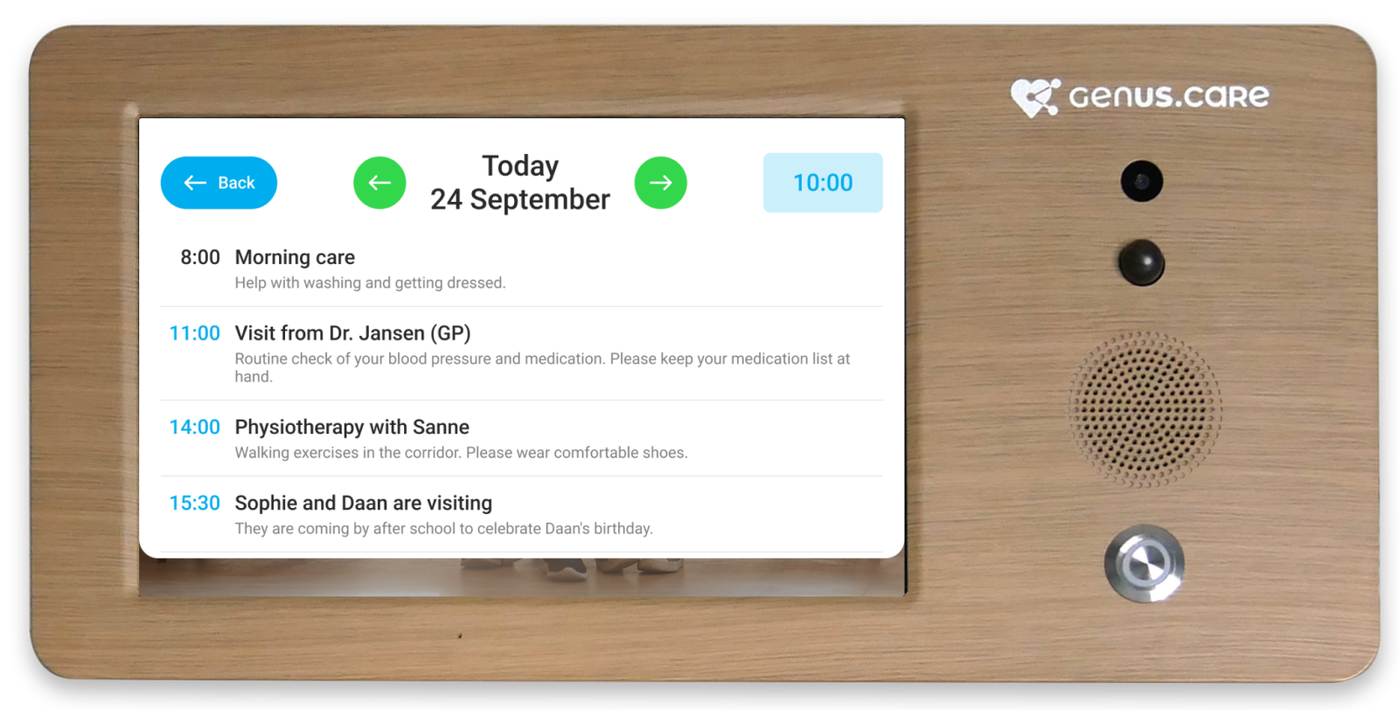
My Day on the Genus now shows more than today. Two green arrows beside the date move to the previous or next day. The header names the day: Today, Tomorrow, or the weekday with the date.

- Details. Tap an appointment to read its full description and see who added it.
- All-day appointments are listed first, marked all day. In the Day Overview on the home screen
they have their own All day section.
- Empty days show Nothing planned. If the agenda can't be loaded, the Genus says so rather than
showing an empty day.

The client always sees the full details of every appointment, even when the privacy setting above is
switched on.

Fixes and improvements

- Repeating appointments no longer lose occurrences when several days are shown at once.
- All-day appointments no longer move to the previous or next day in some time zones.
- Weekly appointments now start on the first selected weekday on or after the chosen start date.
- Simultaneous changes: Two changes saved at the same moment can no longer silently overwrite each other. If a change can't be saved, you see an error instead.
- Descriptions from connected care systems and subscribed calendars are shown as readable text
instead of raw formatting code.


Availability

The calendar is available on the Genus. It is not part of Genus Lite.

- The Community Portal and the Genus receive the update automatically.
- Family members get the calendar by updating the Genus app from the App Store or Google Play.
Mar 31, 2026

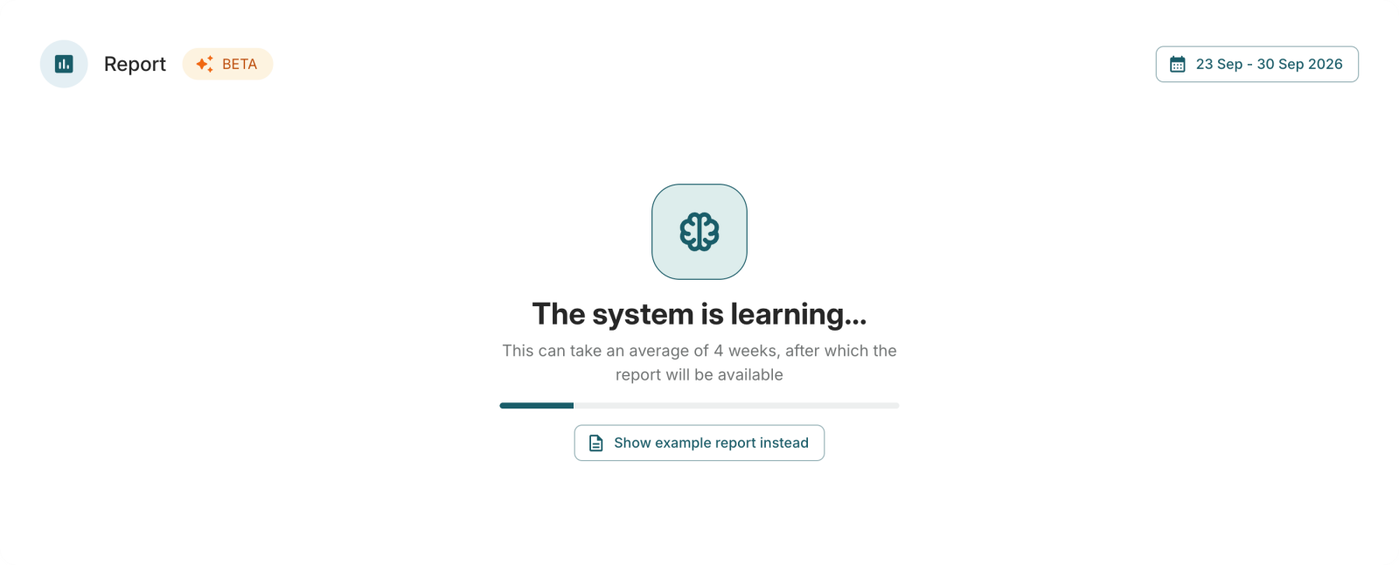
This release focuses on Flexible Nurse Calling improvements, expanded device support, and quality-of-life updates across the Professional App and Community Portal.

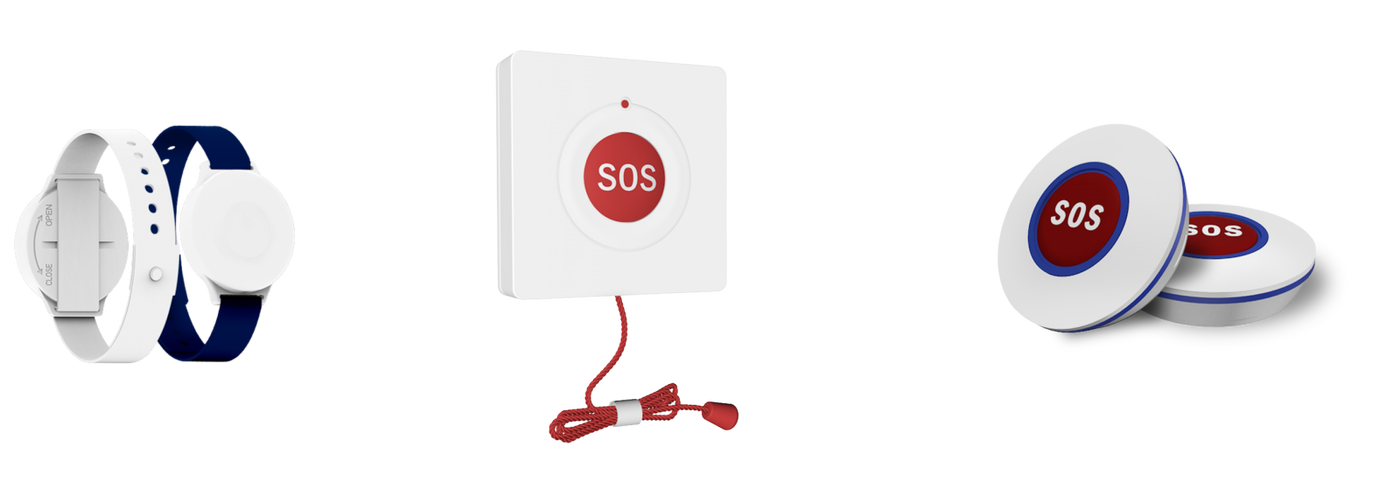
New BLE alarm buttons (Genus Assist)

We’re introducing a new range of BLE (Bluetooth Low Energy) alarm buttons designed for use inside care homes. These buttons support reliable alarming and (where enabled) indoor location tracking.

Available button types

  • Wrist button
  • Pull cord (ideal for toilet/bathroom use)
  • Wall buttons (fixed buttons for rooms, hallways, etc.)

How to pair an alarm button

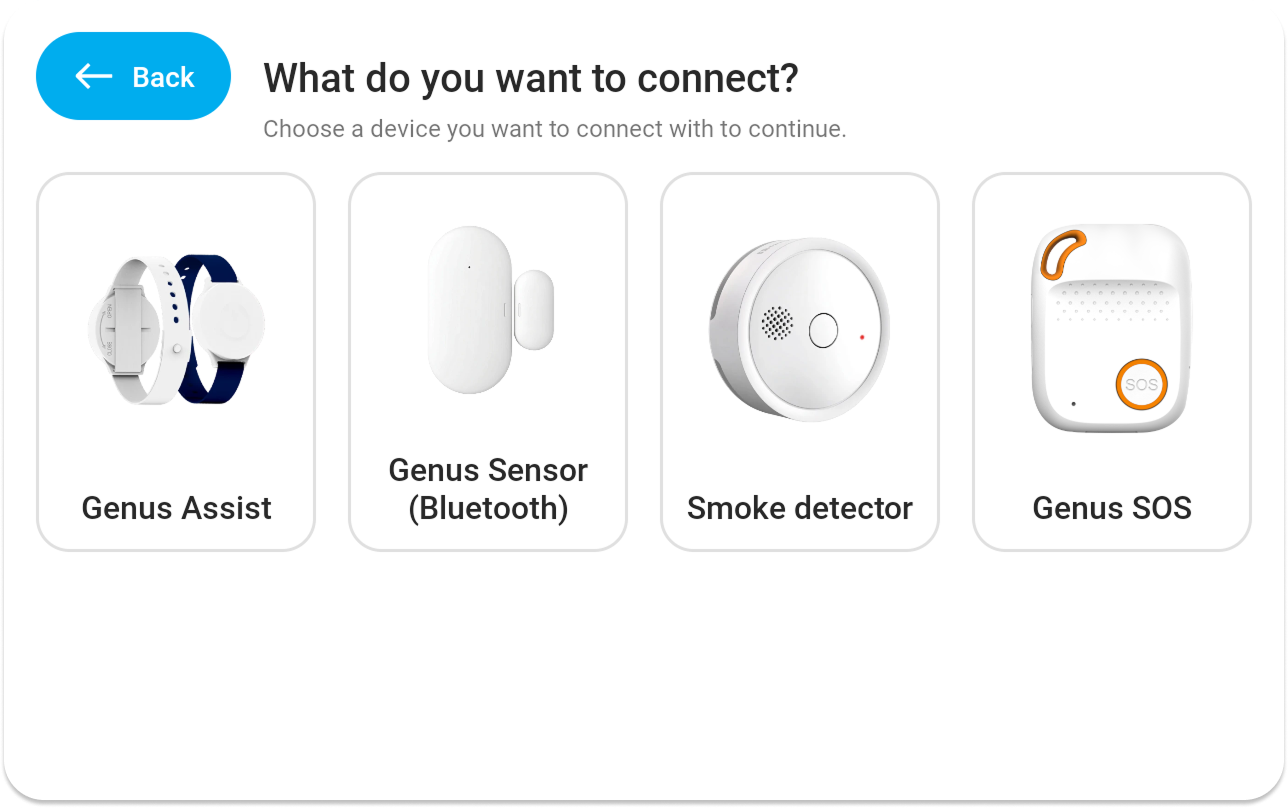
  1. On the Genus device go to: Menu → Connect → Devices → Add new device 
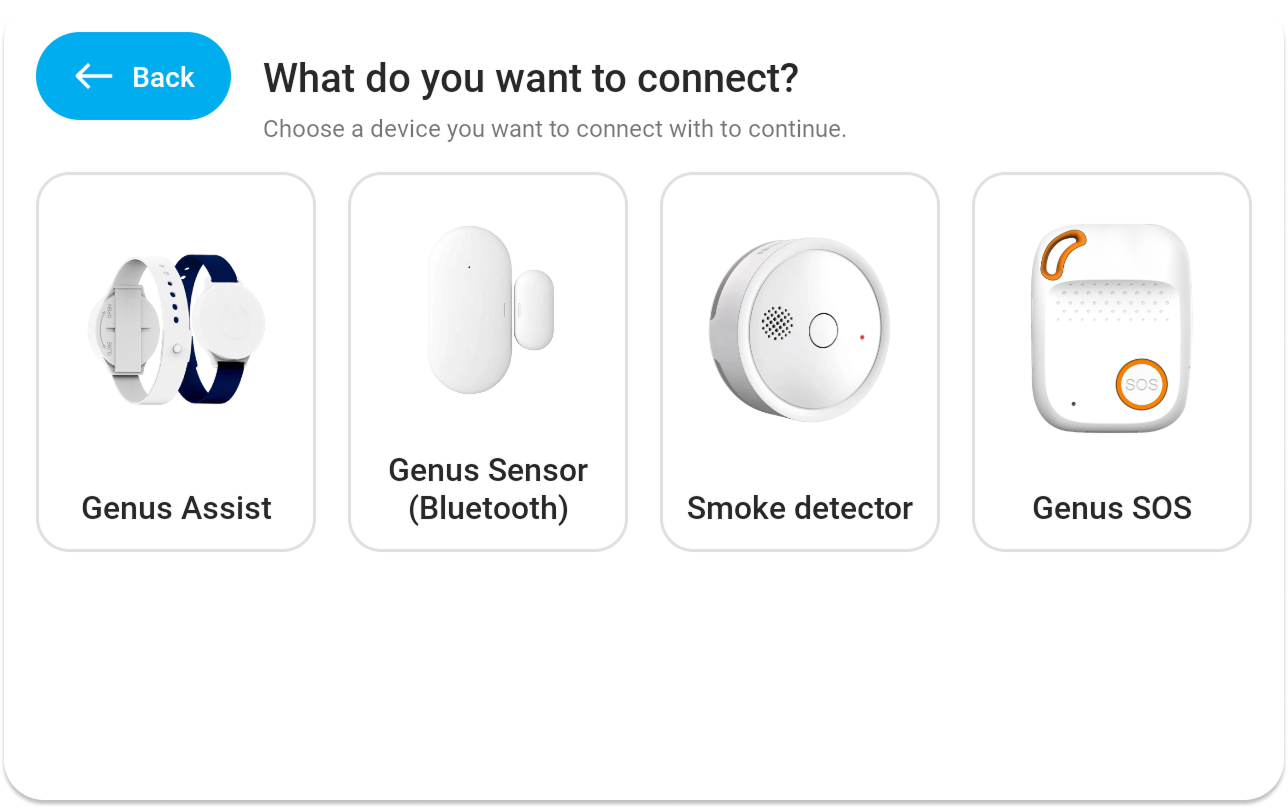
  2. In the redesigned selection menu, choose Genus Assist 
  3. Hold the button close to the Genus device
  4. Let Genus search. Genus will automatically detect and set up the button once found.

Indoor location tracking

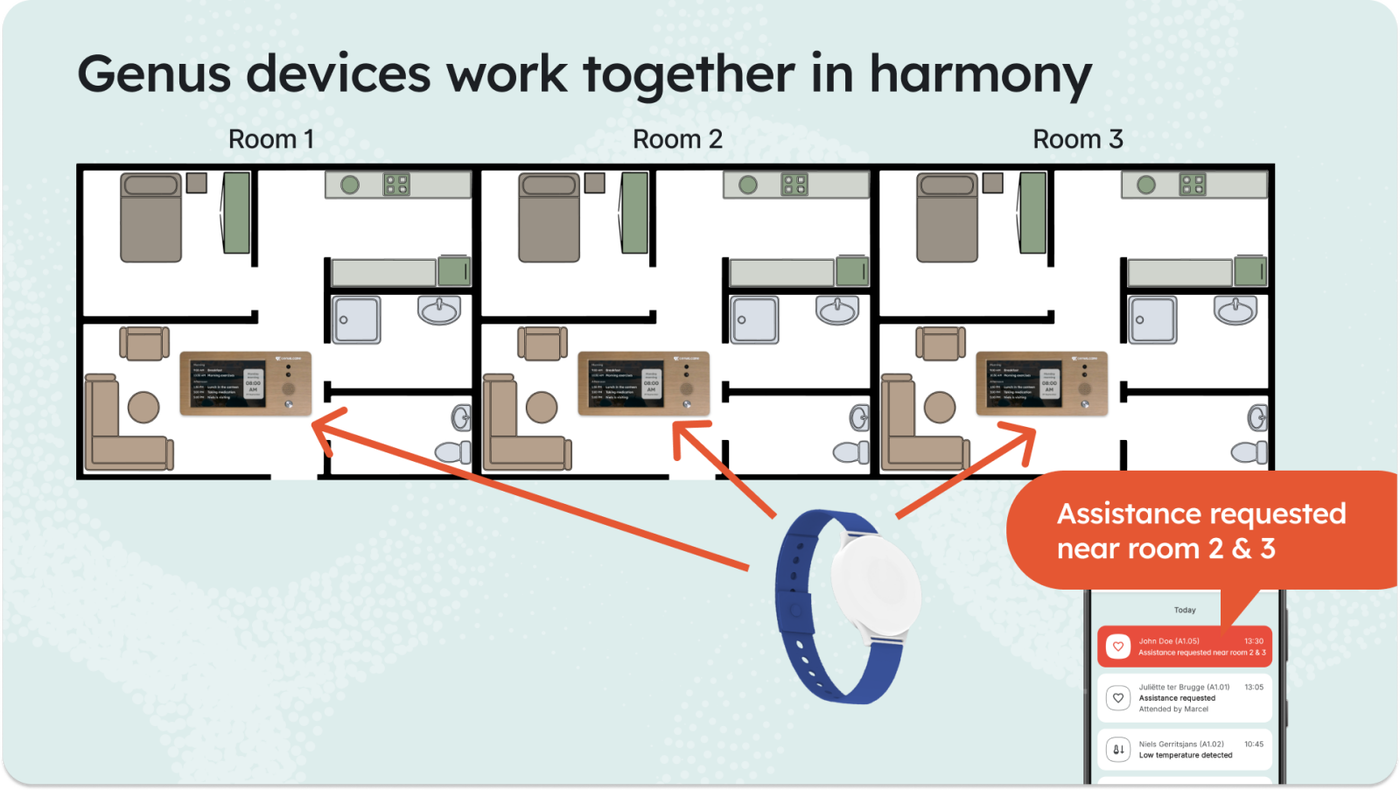
In care homes where each room has a Genus device, you can enable indoor location tracking to help caregivers respond faster.

How it works

  • Each Genus device can be assigned a room number.
  • When an alarm button is pressed (e.g., in a hallway), nearby Genus devices communicate with each other to determine which one is closest.
  • The Professional App will show a clear location hint, for example:
    “Assistance requested near room 2 & 3” 

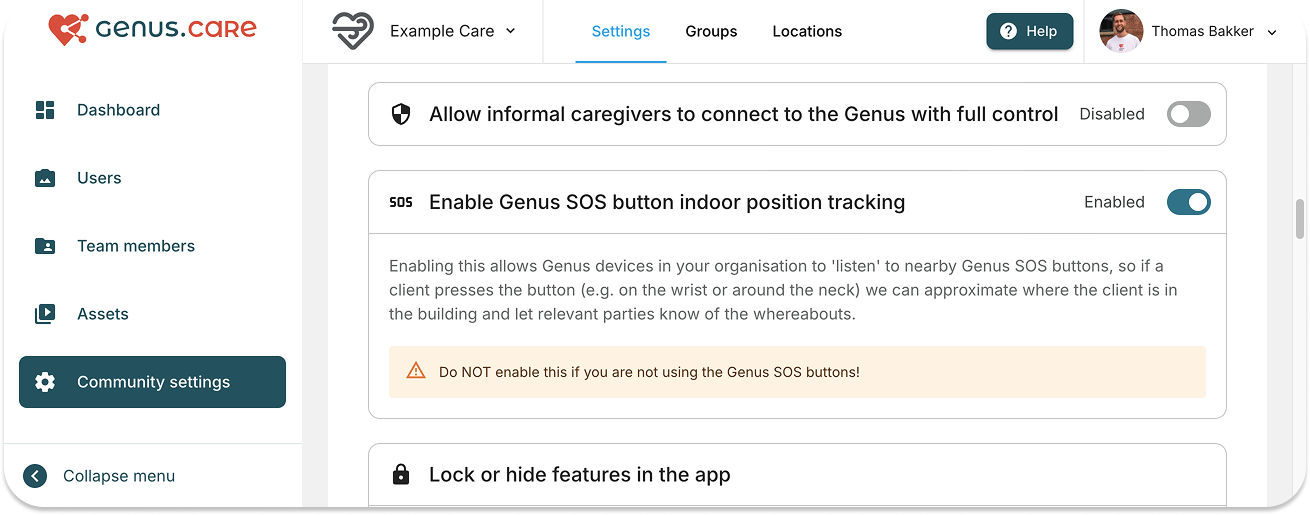
Enable location tracking

  • Go to the Community Portal → Community Settings
  • Enable Location tracking 

Coverage for areas without nearby rooms (Gateways)

For locations such as a restaurant or public toilet where no room-based Genus device is nearby, a Genus Gateway can be deployed:

  • The Gateway can be assigned a location name, so alarms can show:
    “Assistance requested near the restaurant”

Current availability

  • At this time, Gateways must be deployed with configuration support from the Genus development team.
  • In a future update, Gateway deployment / configuration will be added to the Deployer App so integrators can manage this independently.

Flexible Nurse Calling — Device visibility

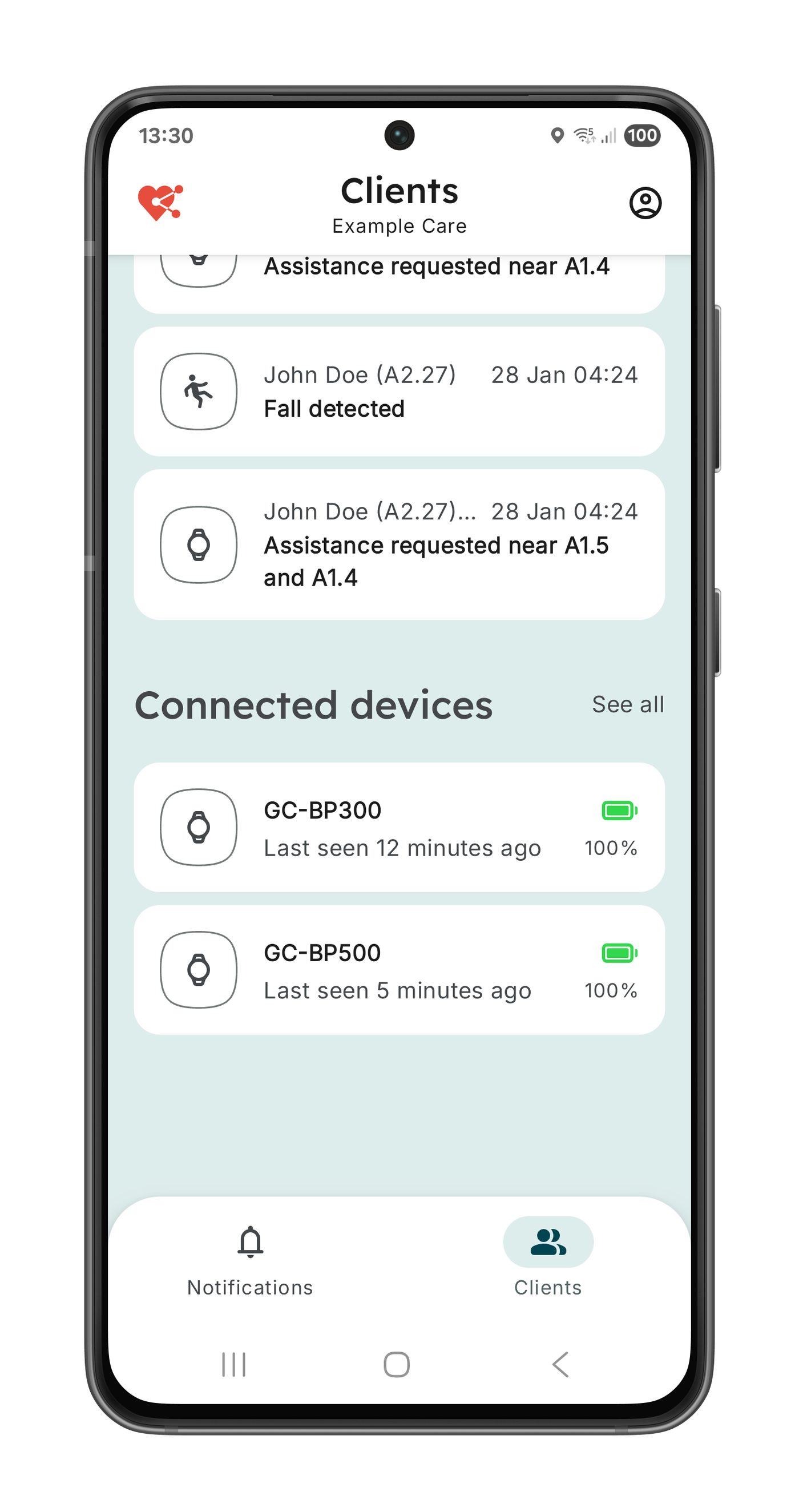
Connected devices are visible in the Professional App, the Community Portal and the Genus device. For every device the battery status is shown as well as the last time it was seen. 


Family access controls (Community Portal)

Healthcare communities can now control what family members are allowed to access when they connect.

You can allow family members to use communication features only, such as:

  • Sending photos
  • Messaging
  • Starting video calls

…without granting access to:

  • Assistance requests
  • Sensor insights

How it’s managed

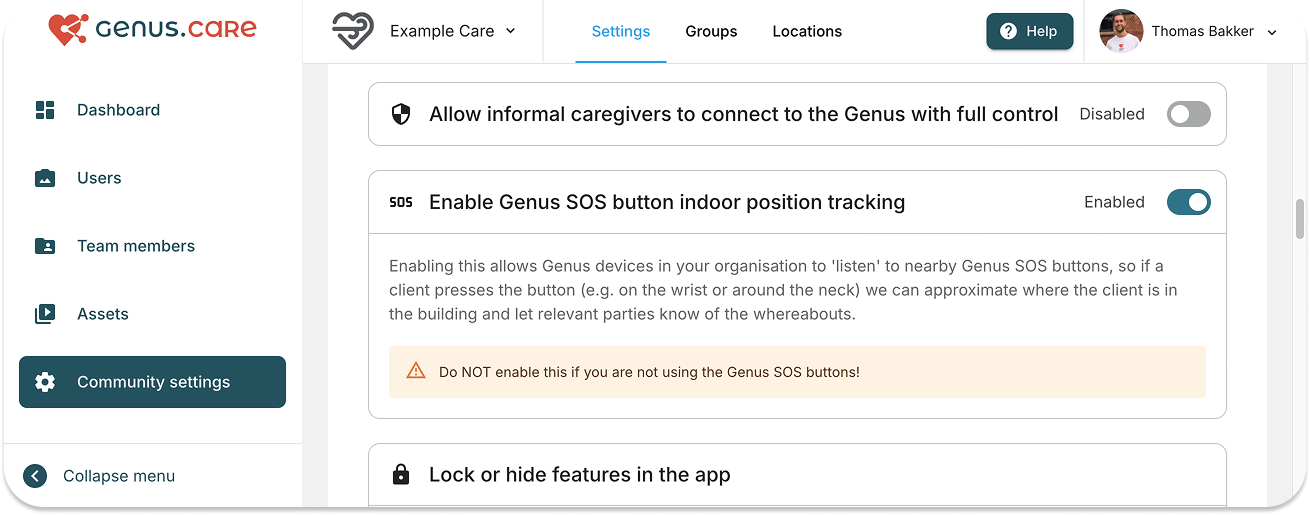
  • Configure in Community Portal → Community Settings (Insert screenshot)
  • For care organisations, this is restricted by default.
  • If a care organisation wants to grant full access, an admin can toggle full access in Community Settings 

Changes to alarming

This update improves clarity, reliability, and the client experience during alarming.

What’s new

  • Text-to-speech confirmation: the client is informed that the alarm was sent successfully.
  • Text-to-speech for alarm reactions: additional voice feedback during alarm handling.
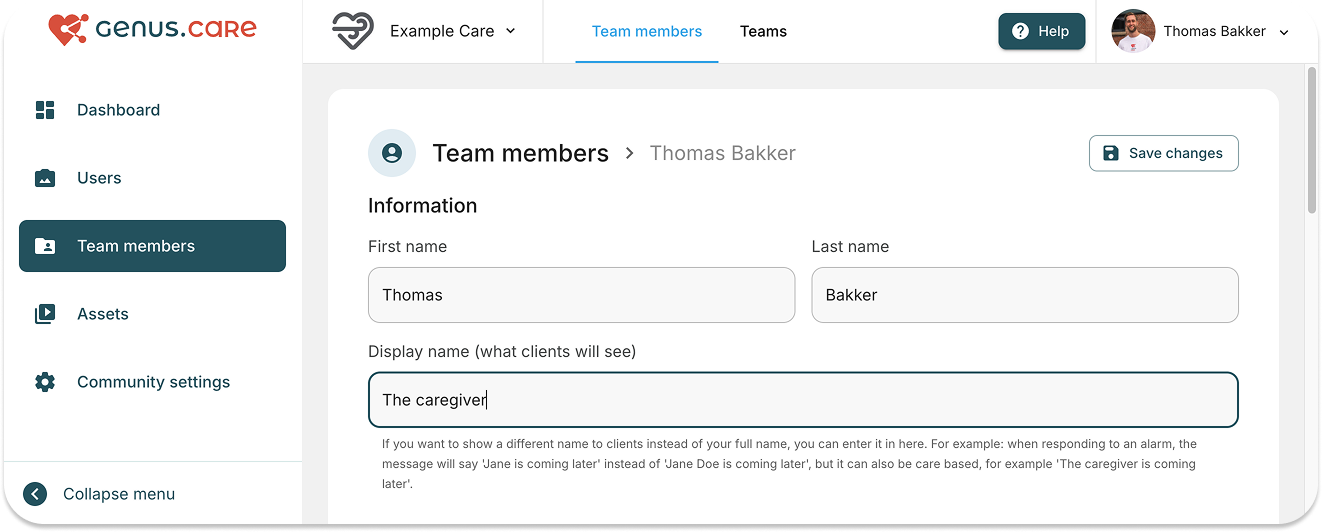
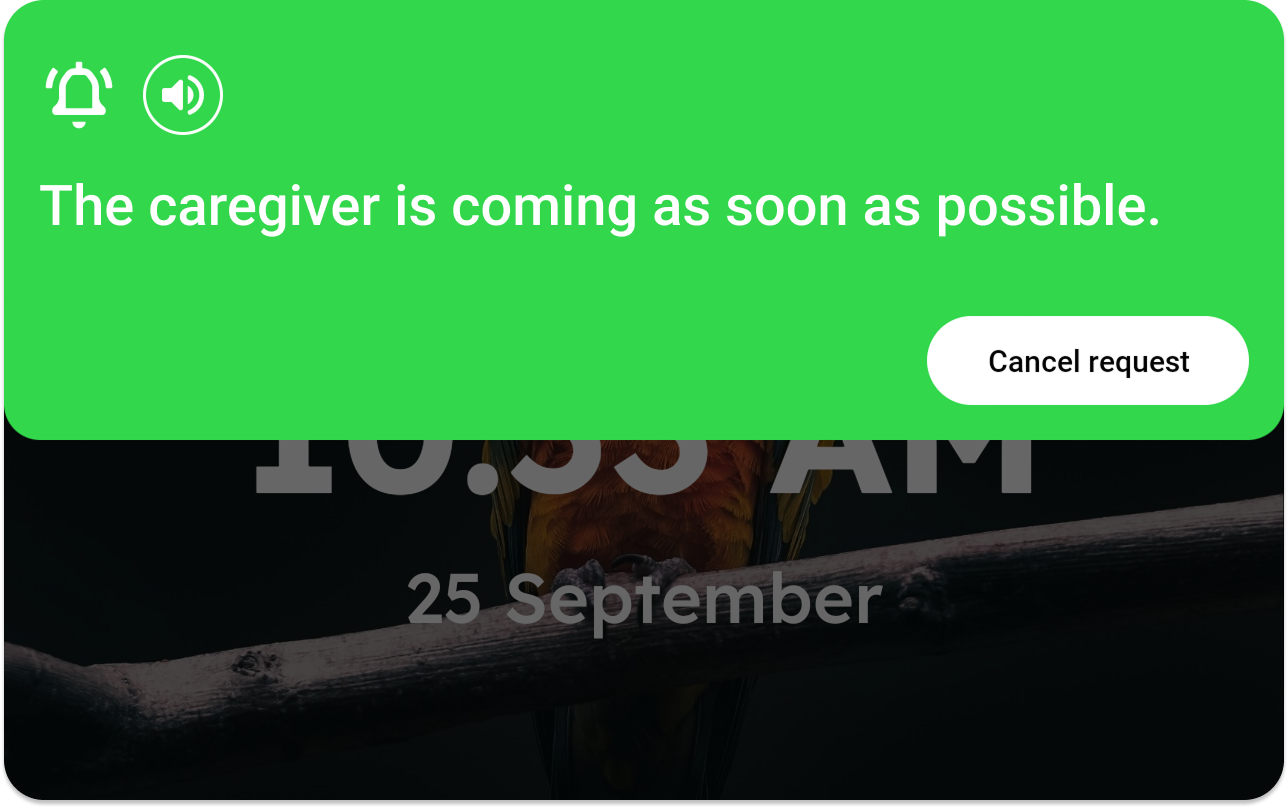
  • Caregiver alias (client-facing name): caregivers can set an alias (e.g., “Caregiver”) shown to the client instead of their personal name .
    Example: “Caregiver is coming soon” instead of “Thomas is coming soon”
  • Improved text-to-speech voice stability.
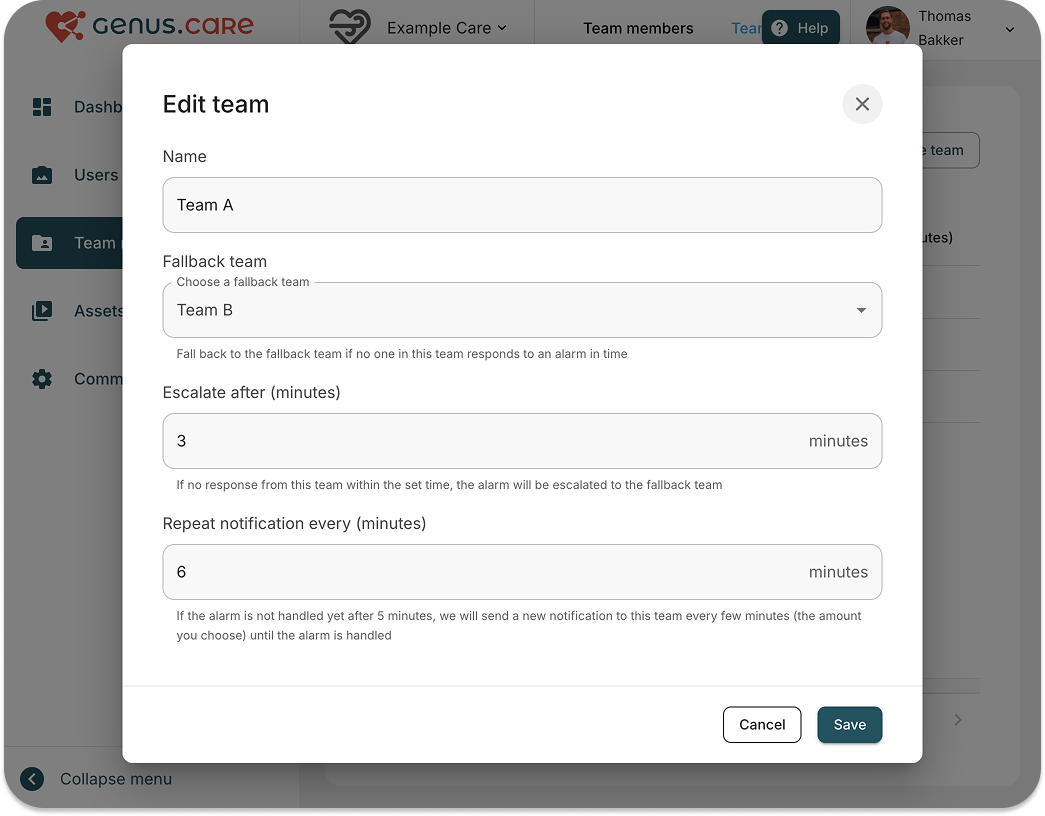
  • Repeating assistance notifications: notifications now repeat until handled. This is configurable per team 

Professional App updates

  • Assistance requested system notification is removed when the assistance request is solved (for a cleaner notification experience).
  • Improved date / time formatting for different countries / locales.
  • Video calls now automatically switch to speaker mode.
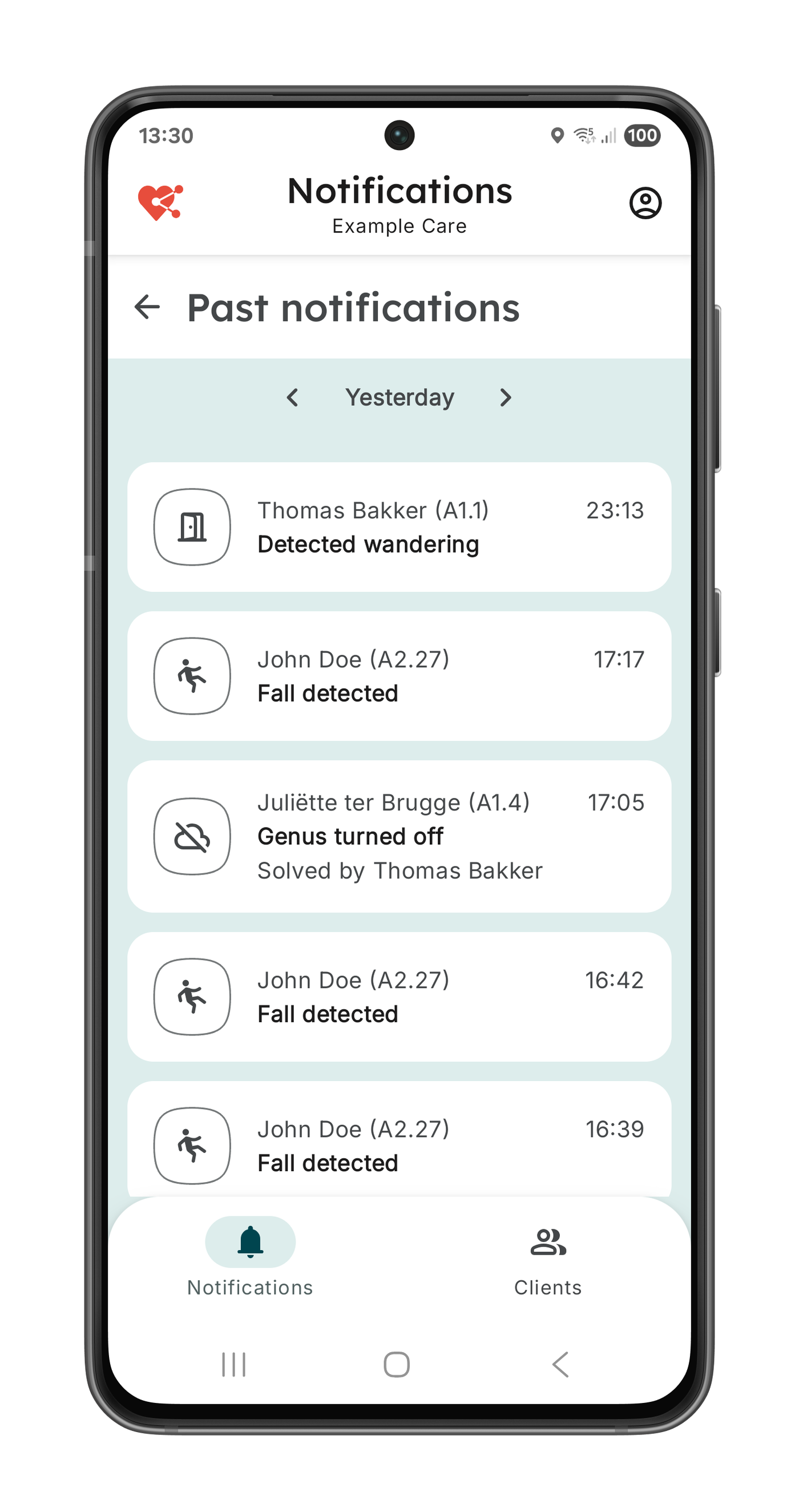
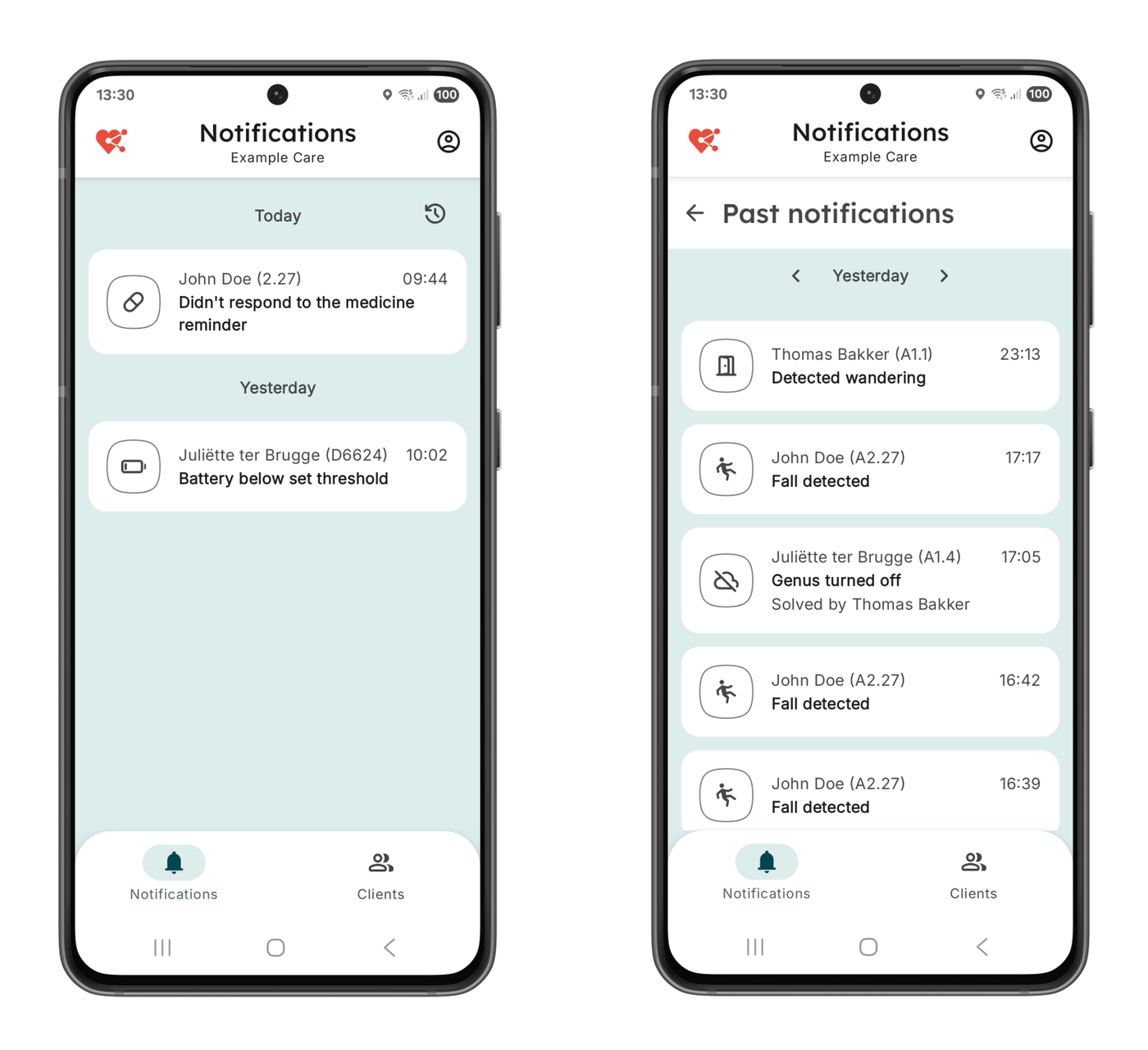
  • Added historic notifications (view past notifications)
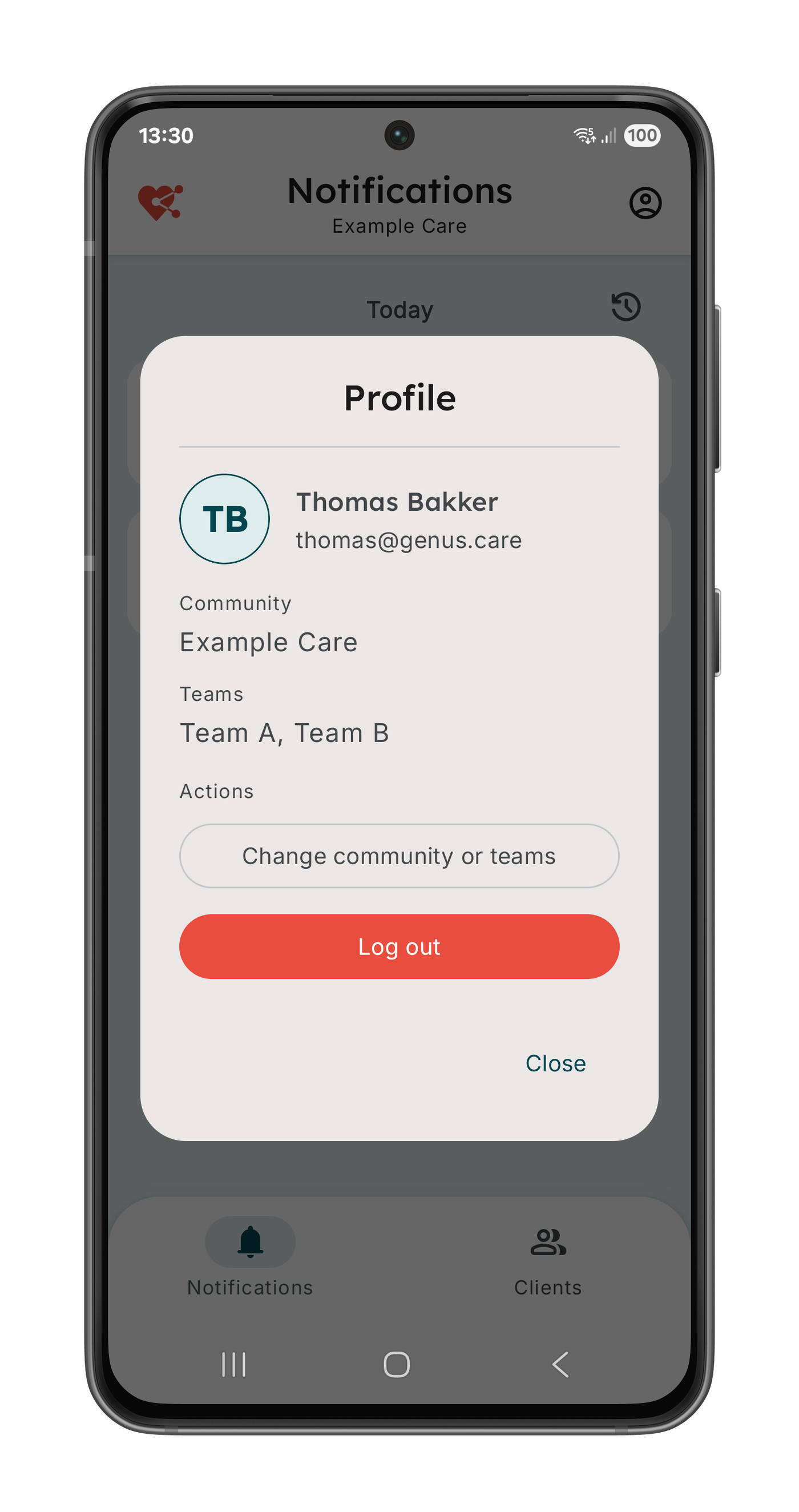
  • New / updated Profile page.
  • Support for unrestricted battery usage (to improve background reliability where permitted).
  • Faster notifications (improved delivery speed).

Community Portal updates

  • Teams added to the client overview
  • New team filter to quickly find and manage clients by team

Manual of the Professional App

A manual for the Professional App was created and can be found here: https://drive.google.com/drive/folders/13OkPckYxuJzTsTCnMmSQGiGIPTx6HAxJ 

Mar 14, 2026

This update adds support for paired smoke detectors to improve safety and ensure smoke alarms reach caregivers and family members quickly—even if the Genus device is temporarily offline.


New: Pair a smoke detector with Genus

Smoke detectors can now be paired to a Genus device using the device connection flow.

How to pair

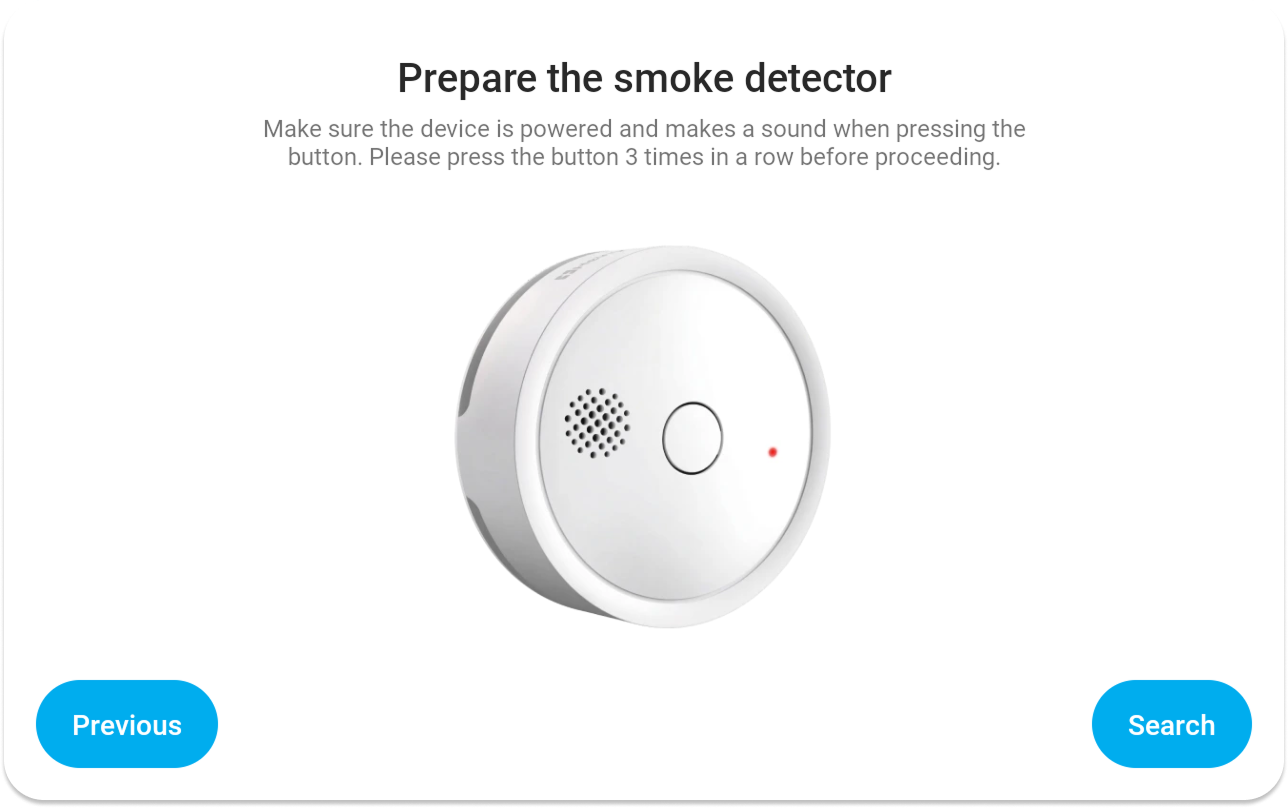
  1. On the Genus device, go to "Menu" > "Connect" > "Add a new device", select the Smoke detector" and let the Genus device start scanning for nearby devices.
  2. Put the smoke detector into pairing mode by pressing its button 3 times quickly.
  3. Genus will discover the smoke detector and complete setup automatically.

After pairing: smoke detector works independently

Once paired, the Genus device will configure the smoke detector’s Wi‑Fi. After that, the smoke detector can operate independently of Genus.

This means:

  • Smoke alarms will still be delivered to professional care even if the Genus device is offline.

Smoke alarm experience (client, family, and care teams)

When smoke is detected:

In the client environment

  • A warning message is shown on the Genus device
  • The warning is also spoken out loud to alert the client
  • The smoke detector triggers a traditional siren alarm locally

For family and professional care

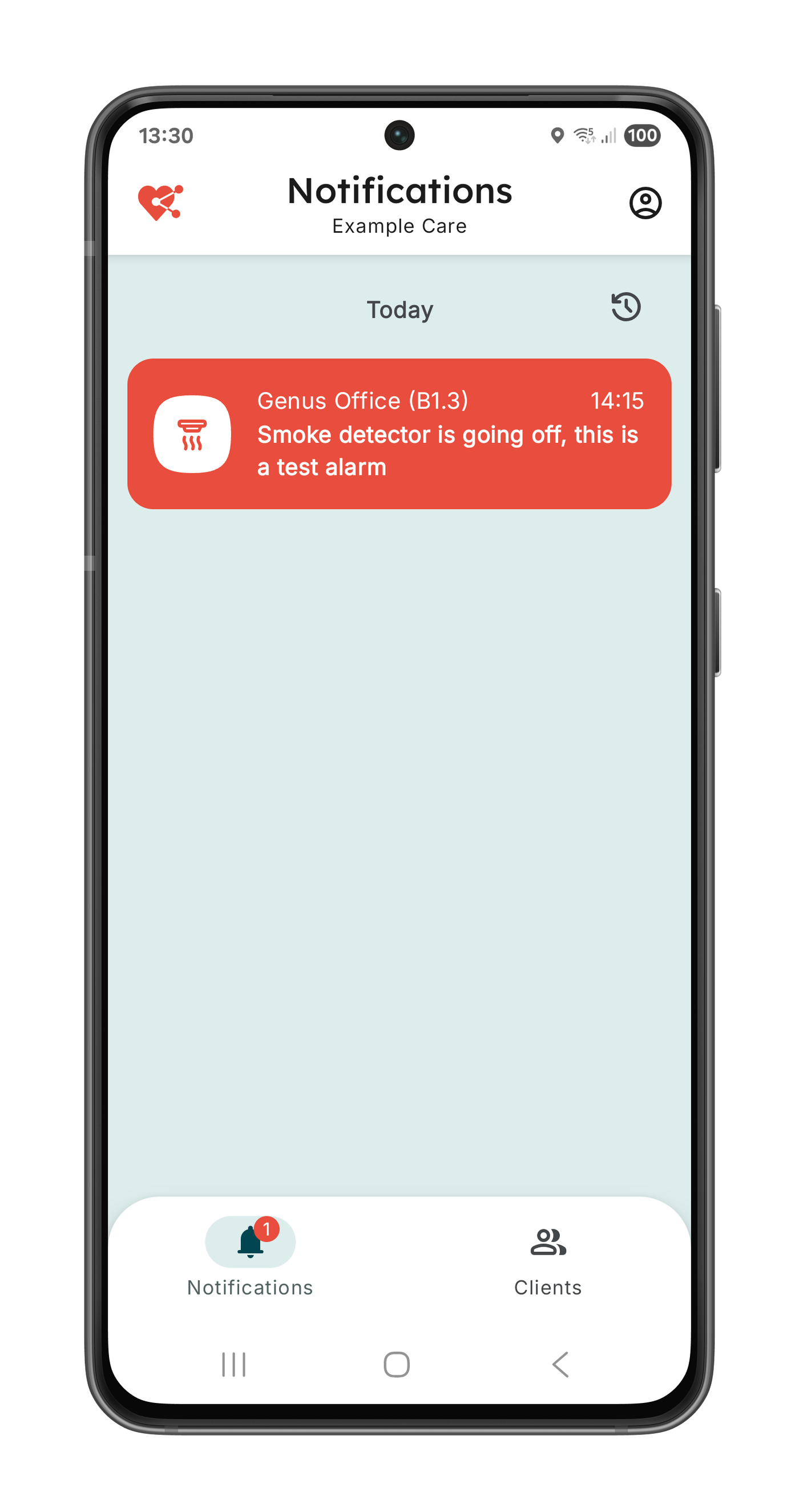
  • Alarm notifications are sent to phones so recipients can act immediately.
Mar 01, 2026

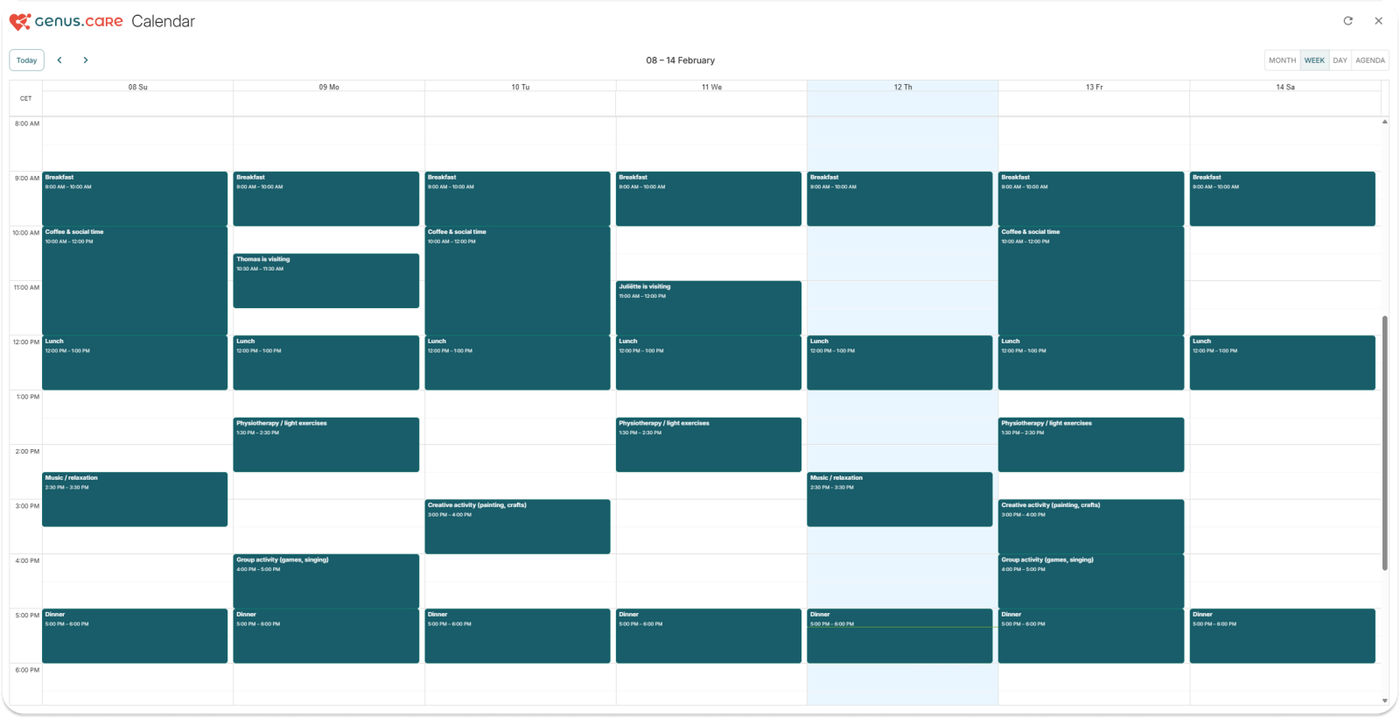
This update introduces a new client calendar in the Community Portal, making it easier to plan and track client-related activities. We’ve also added French language support.


New: Client calendar

A calendar is now available for every client in the Community Portal.

Calendar views

  • Month
  • Week
  • Day

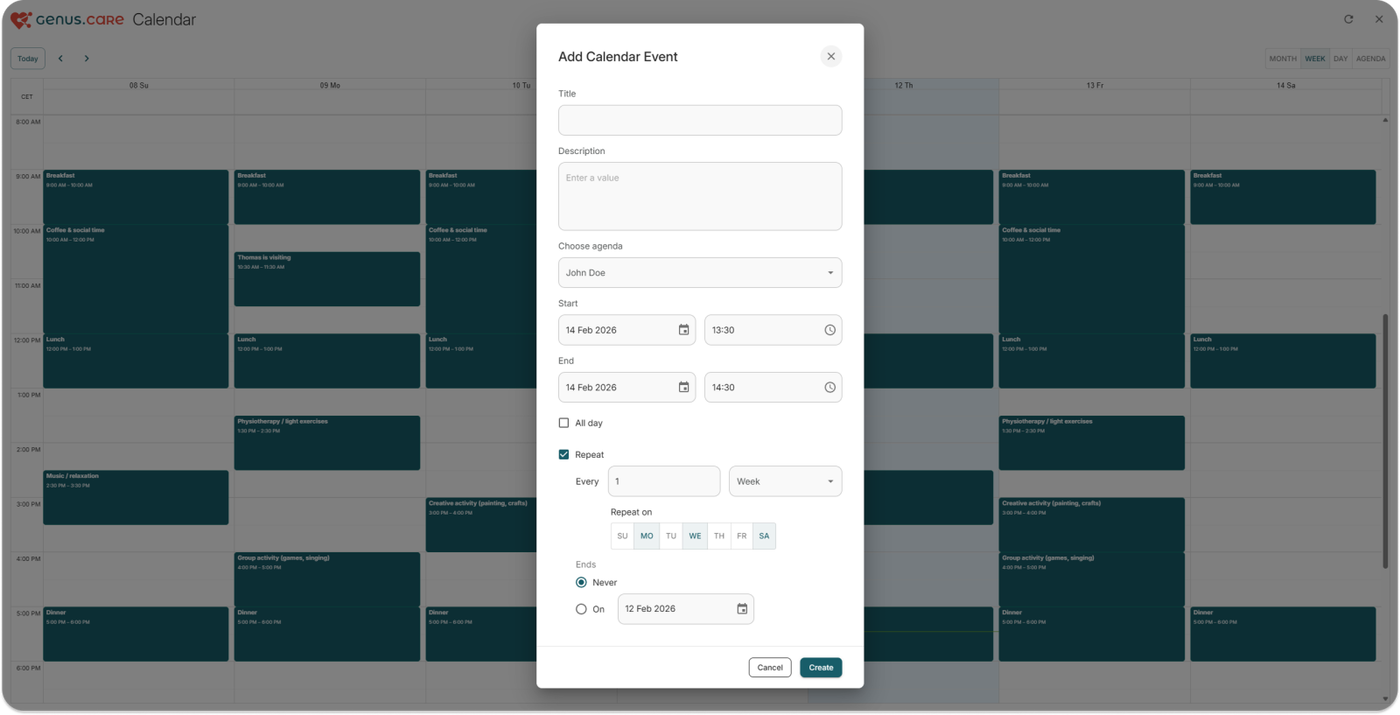
Create and manage events

You can add events directly in a client’s calendar with the following options:

Event details

  • Title
  • Description
  • Start and end date/time
  • All-day events (supported)

Repeating events (optional) Set events to repeat with flexible recurrence options:

  • Repeat daily, weekly, monthly, or yearly
  • Repeat on specific weekdays (e.g., every Monday, Wednesday, and Friday)
  • Optionally set a repeat end date

Language support

  • Added French language support in the Community Portal.
Feb 25, 2026

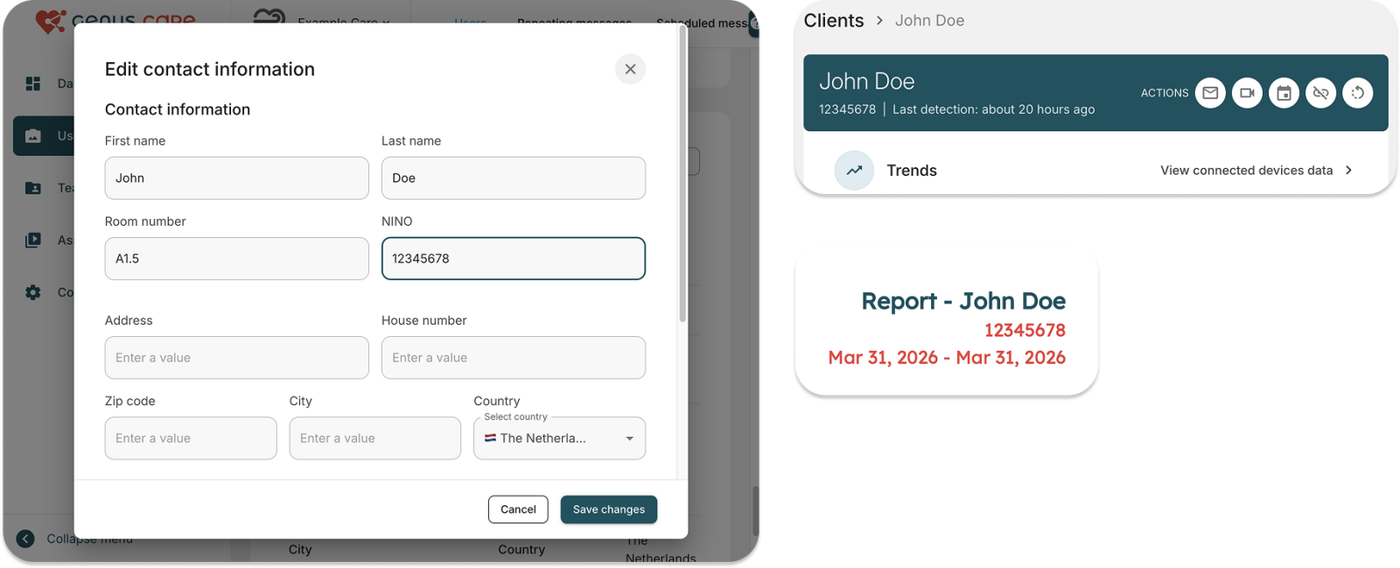
This update adds support for storing a client’s national identity number in a secure and controlled way.

New: National identity number field for clients

A client’s national identity number can now be recorded as part of the client profile.

Where it’s available

  • Community Portal: available in the client information (for authorized users)
  • Reports: can be included in generated reports where applicable

Security

  • The national identity number is encrypted in the database to protect sensitive personal information.
Feb 20, 2026

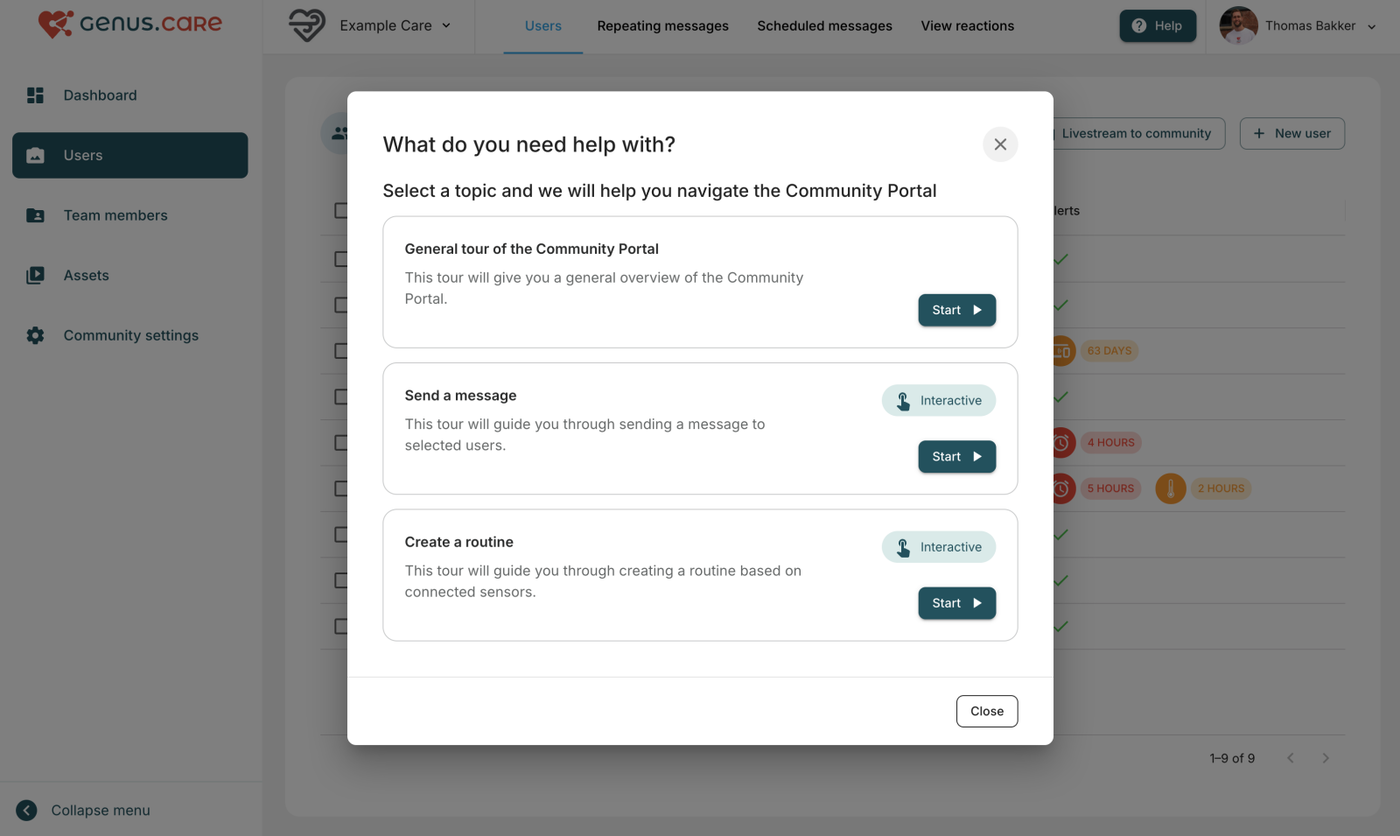
New: Guided tours (interactive help)

Users can now start guided tours that walk them through common tasks—such as sending a message to a client.

How it works

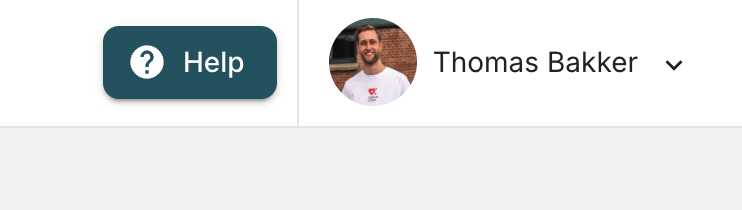
  • The function can be accessed by the new Help button on the top right of the screen
  • Tours provide step-by-step instructions directly in the portal
  • Each step highlights what to click and where to go next
  • The experience is interactive, functioning like a live, in-product demo while you complete the task

Available tours

  • Tours are grouped by feature/workflow and can be expanded over time as new guidance is added.

Jan 20, 2026

Improved repeating message editing, enhanced ONS synchronisation, added experimental location linking, message expiry support, and updated Dutch terminology.
🛠️ Improvements & New Features

🔁 Repeating Messages & Alarming

  • Improved editing of repeating messages in combination with alarming settings, making configuration clearer and more reliable.

🔗 ONS Client Synchronisation

  • When linking an ONS client to a Genus, the client name is now automatically synchronised to the Genus client.

🗺️ ONS Location Linking (Experimental)

  • Added support for linking an ONS location to a Genus (currently a hidden experimental feature).
  • When enabled, the location agenda is synchronised to the Genus calendar in addition to the ONS client calendar/planning.

⏱️ Maximum Message Display Time

  • Messages can now have a maximum display duration after which they automatically disappear from the Genus.

🇳🇱 Terminology Update (Dutch)

  • Renamed “Gebruiker” to “Cliënt” for improved clarity and consistency.
Jan 13, 2026

Added full message, notification, and call history to the Professional App, along with Call Me support, auto-refreshing notifications, and an improved dark mode.

🚀 New Features

💬 Message History per Client

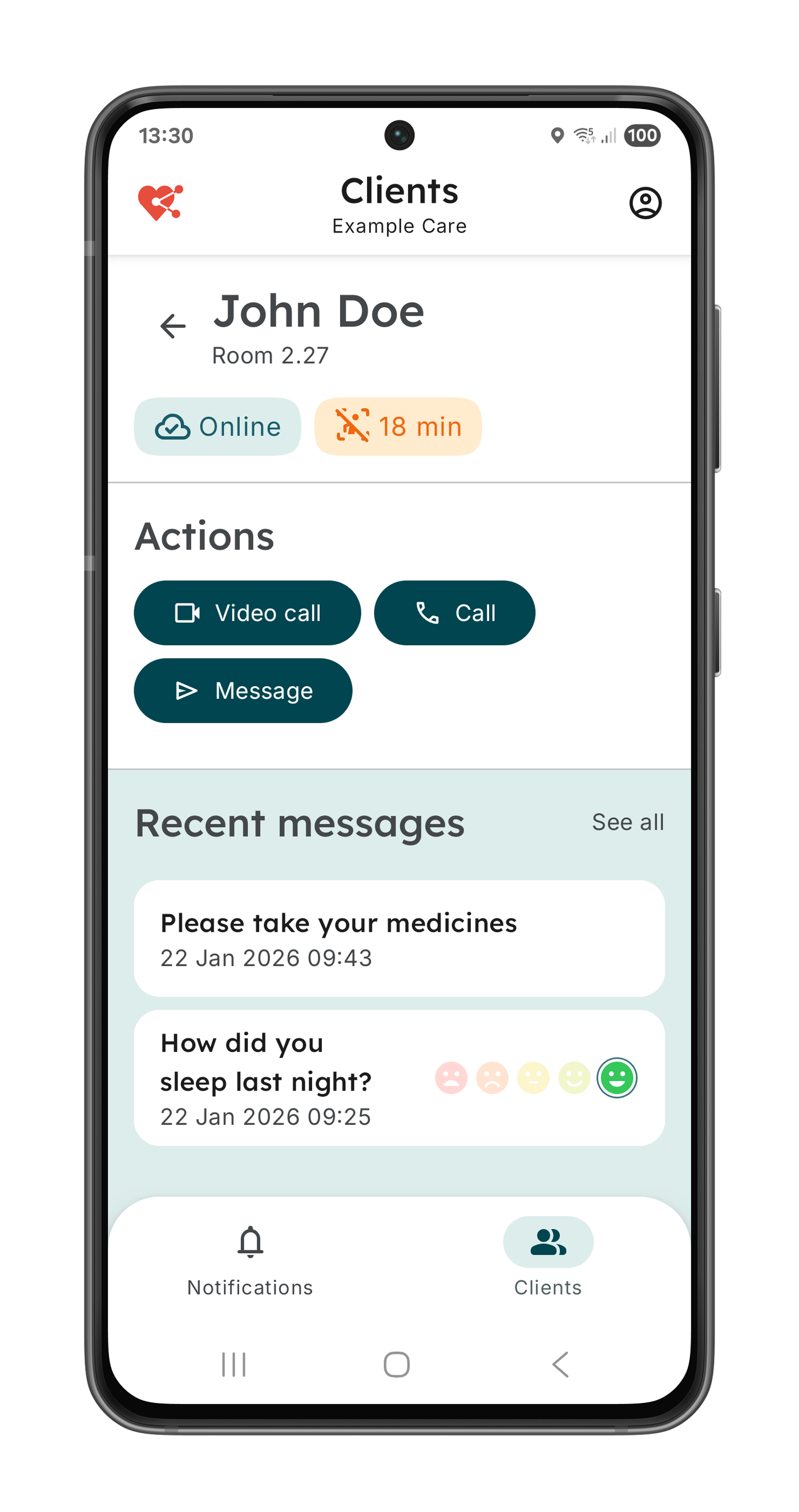
  • Caregivers can now view the complete message history per client, providing better context and continuity of care.

📊 Notification, Activity & Call History

  • Added notification, activity, and call history per client, giving clear insight into recent interactions and actions. Can be accessed by going to the client detail.
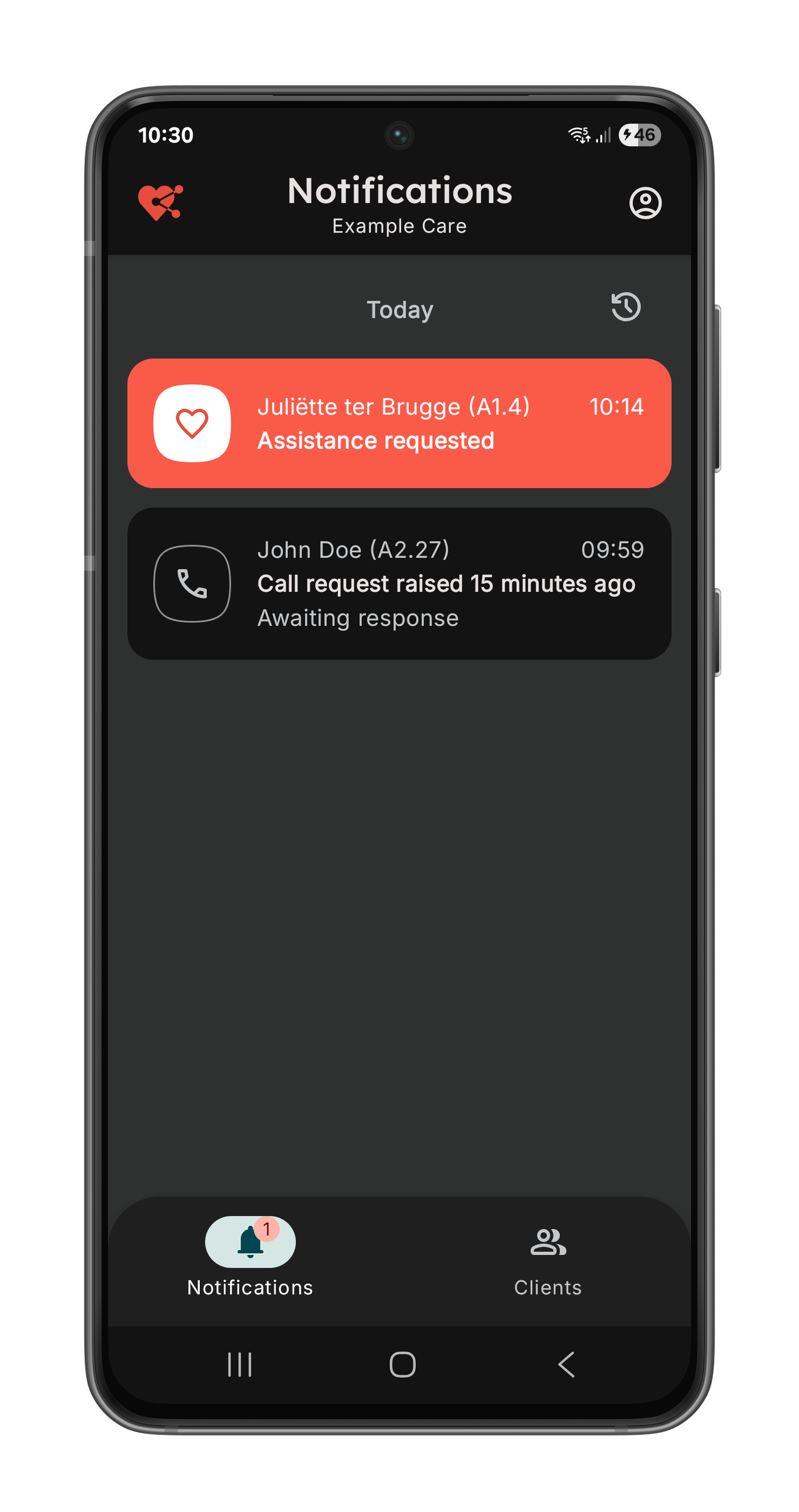
  • Introduced notification history at care organization level, improving transparency and oversight. Can be accessed by going to the notifications screen and tapping the history icon to the right of "Today".

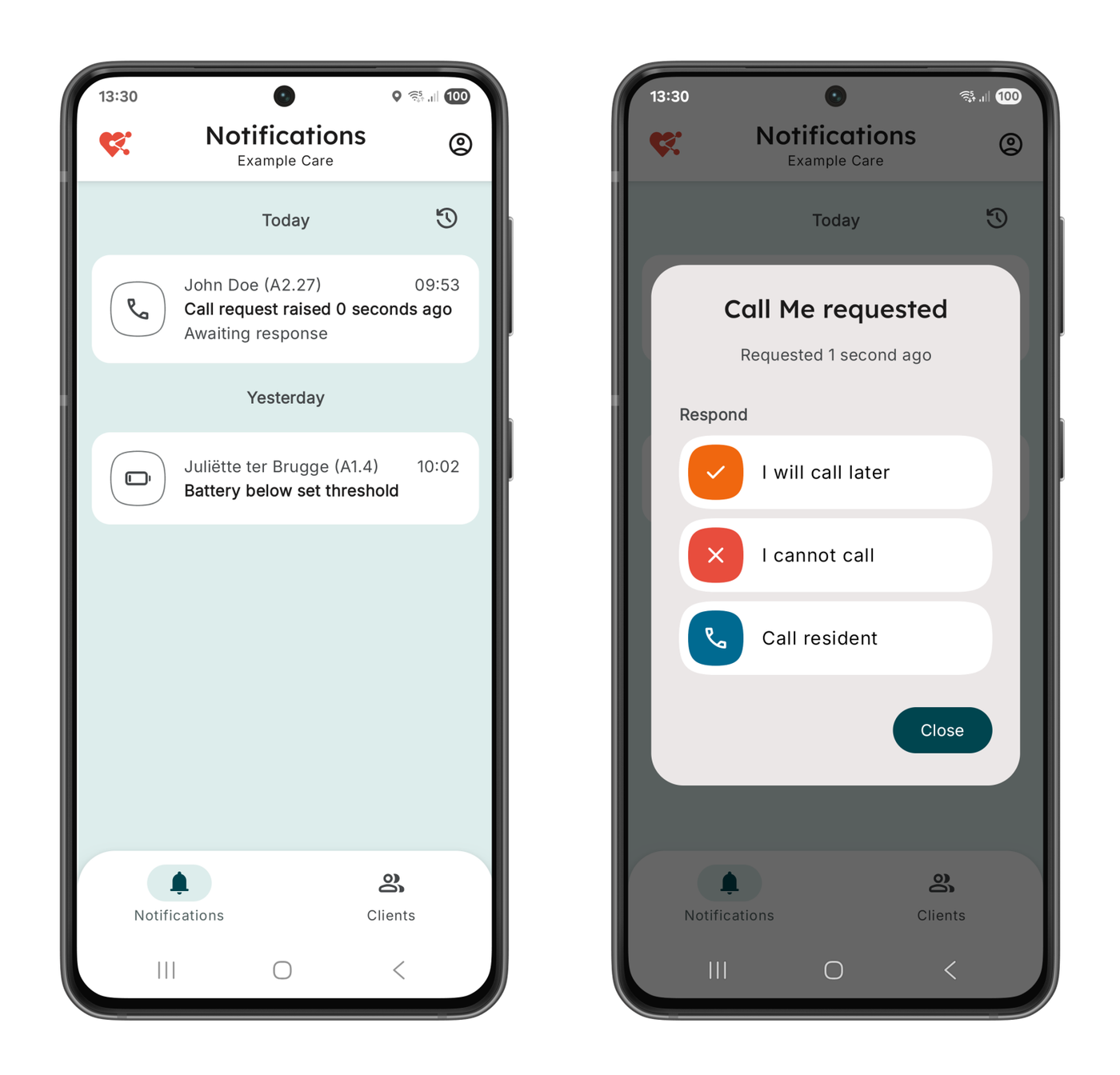
📞 Call Me Support

  • Added Call Me support to the Genus Professional App, enabling clients to request direct contact from caregivers.

🔄 Automatic Notification Refresh

  • Notifications now refresh automatically, ensuring caregivers always see the latest information without manual updates.

🌙 Improved Dark Mode

  • Enhanced dark mode for better readability and comfort in low-light environments.
Jan 10, 2026

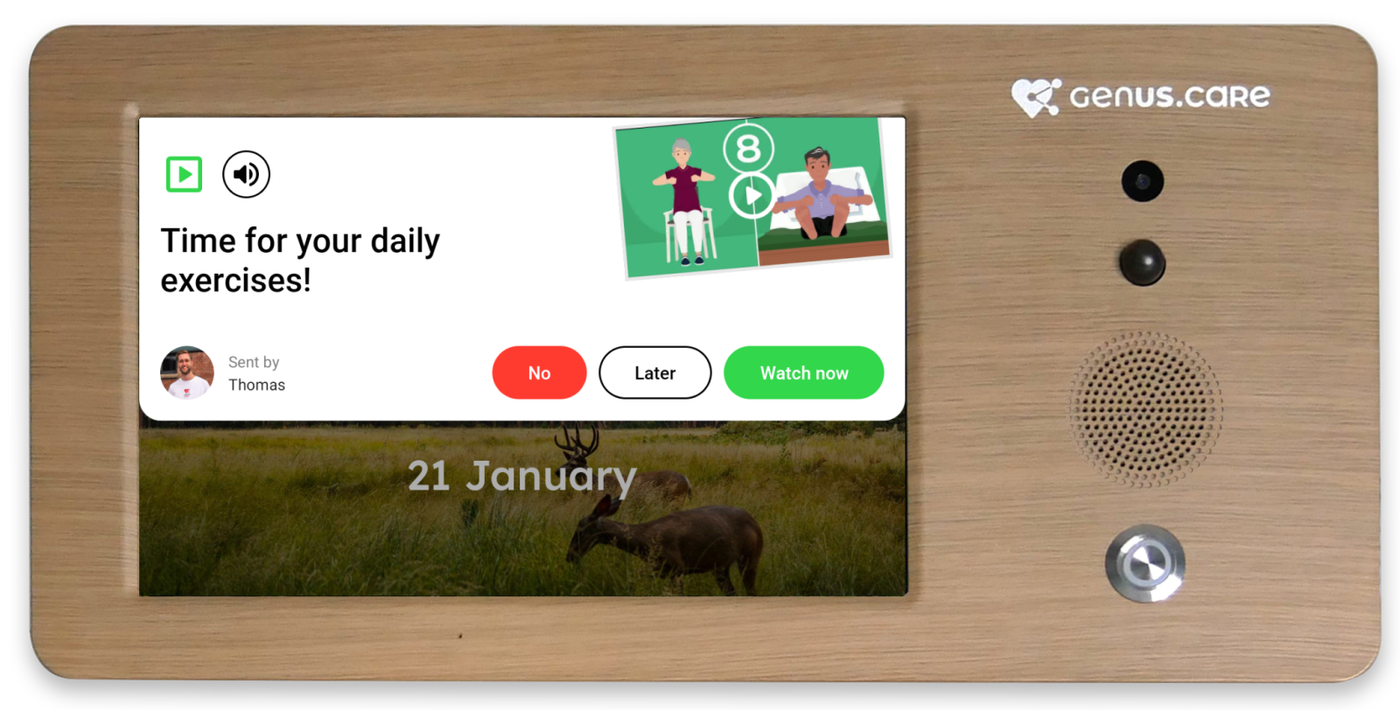
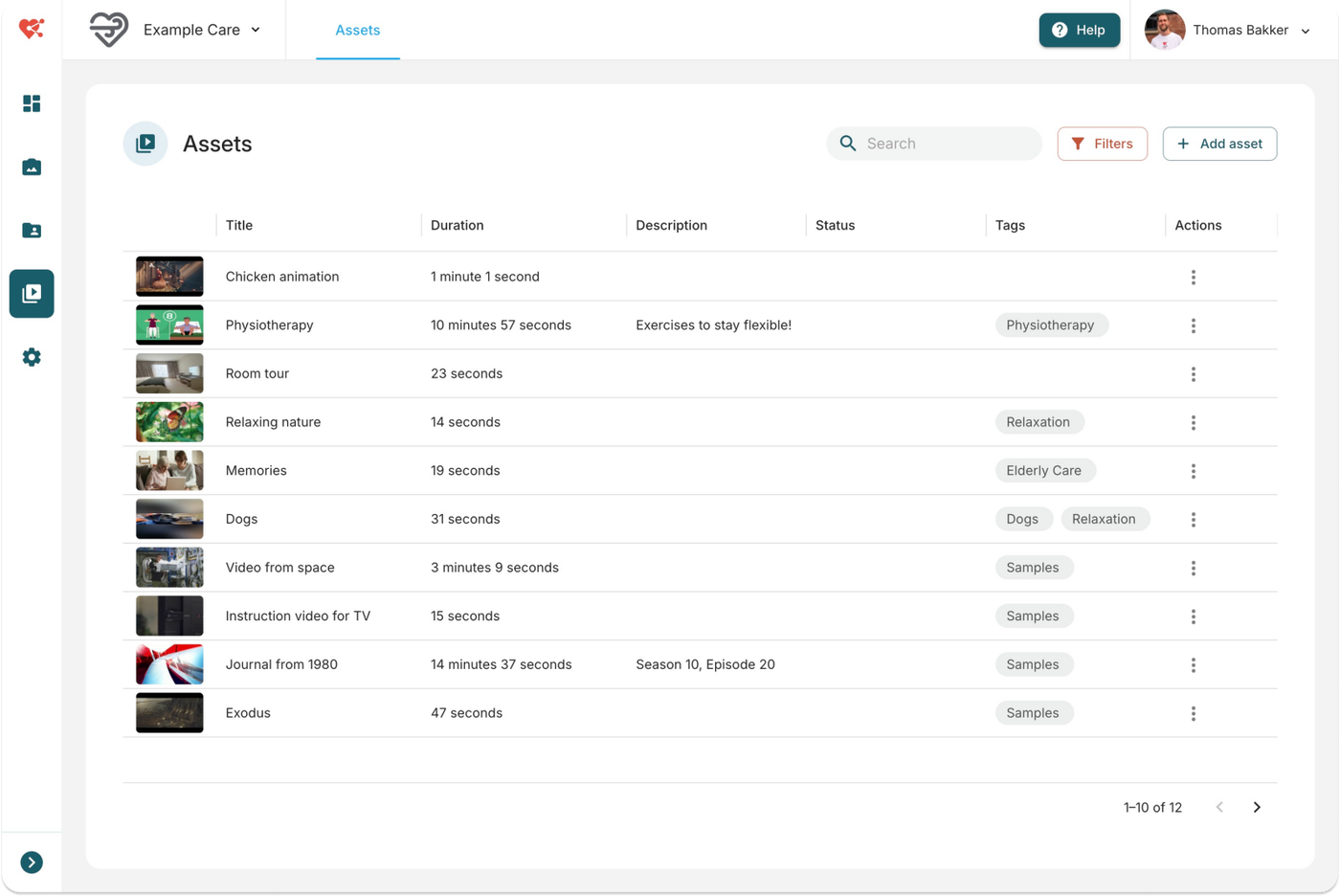
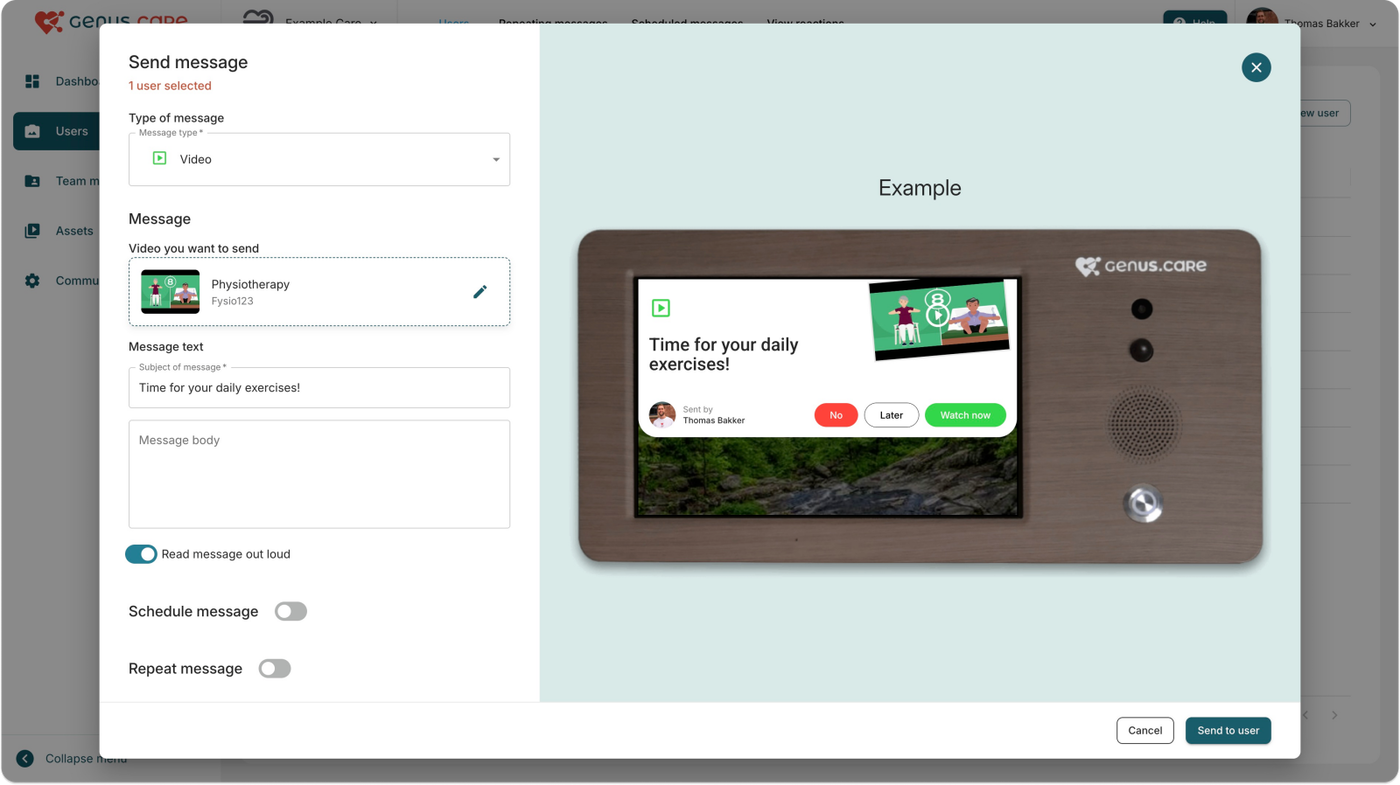
We’ve added video support to Genus, making it easy to share guided content directly with clients. Videos are ideal for physiotherapy exercises, daily movement routines, and activities that help elderly clients or people recently discharged from hospital stay active, supported, and engaged right from their own environment.


🎥 New Features

📤 Video Uploads & Messaging

  • Videos can now be uploaded to the Community Assets Library.
  • After uploading a video, the Genus platform will resize the video to match the resolution of the Genus and optimize the file size.
  • After a video has been processed, it can be attached directly to messages sent to the Genus.
  • Clients can choose to postpone videos and watch them at a later time.
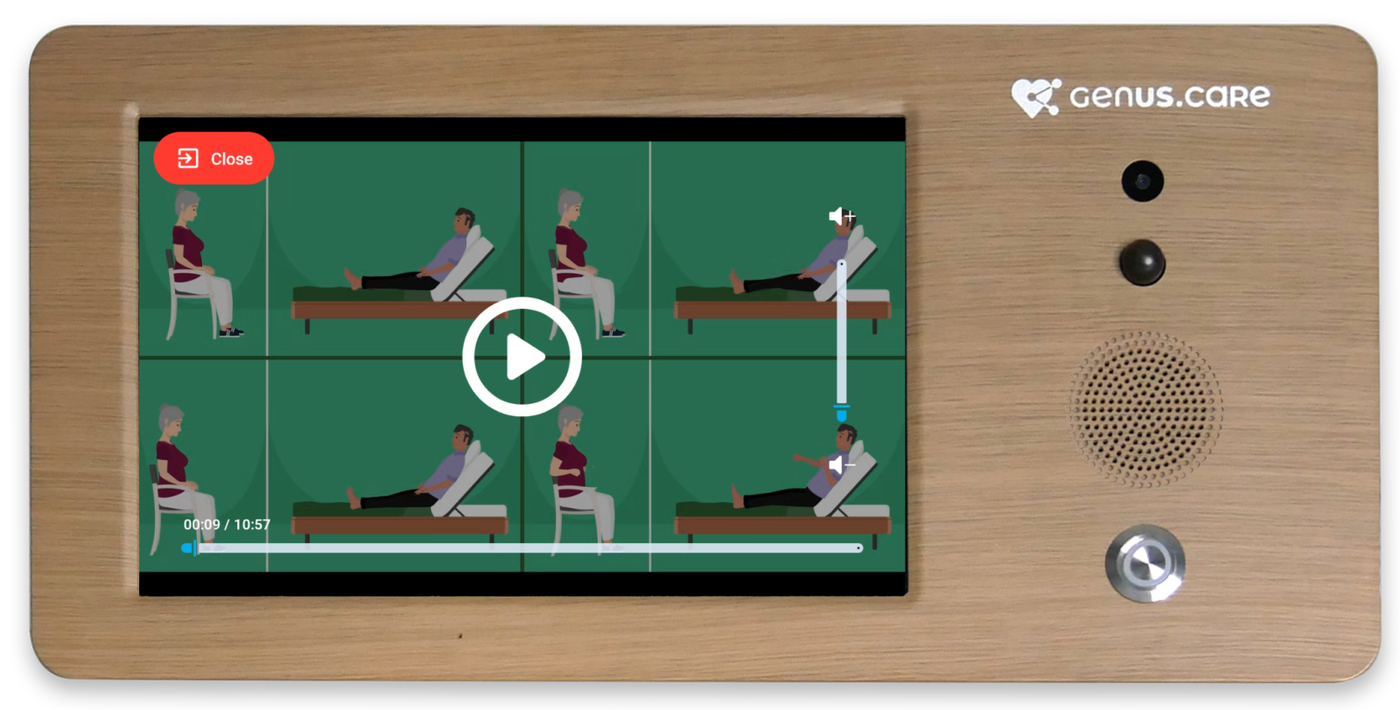
  • When a client presses play in a message, the video starts automatically.
  • After playback, the client can either close the video or watch it again.

🔊 Improved Volume Controls

  • Added new volume sliders for improved media control. Clearly differentiating the different volume types you're adjusting.
  • Media volume can now be configured in Genus settings, both in the portal and on the device.

🐛 Bug Fixes

  • Various bug fixes and stability improvements.
Dec 17, 2025

Message Scheduling Fix

  • Fixed an issue where scheduled messages in certain timezones were incorrectly sent using CET time.
  • Additional improvements to timezone handling are planned for Q1 2026 to further increase reliability.
Dec 15, 2025

New: Alarm Webhooks

  • Introduced webhooks that allow external platforms to subscribe to Genus alarms.
  • Alarms can then be received and responded to directly through the Genus Alarm API, enabling deeper integrations and automated workflows.

Performance Improvements

  • Improved performance when retrieving notifications in both the Portal Dashboard and the Genus Professional App, resulting in faster updates and a more responsive experience.
Dec 02, 2025

In addition to locking specific UI elements on the Genus device, you can now hide them completely.
This behaviour can be configured directly in the Community Portal, giving you more control over the user interface and experience.

For example, if your organisation doesn't want to use the Call Me functionality, you can hide the Call Me button in the photo overlay and in the main menu.

Other Genus updates

  • Greek translations have been refined
Subscribe